Tetra Pak launches world-first paper-based barrier for juice packaging with García Carrión and advances new packaging material development
Lausanne, Switzerland 10th December 2025: Tetra Pak, in collaboration with García Carrión, today unveiled the first-ever use of its paper-based barrier technology for juice packaging. This innovation in sustainable food packaging solutions marks a significant step towards reducing reliance on fossil-based materials, with the new packaging material now being rolled out across multiple markets.
World-first aseptic carton with paper-based barrier for the juice category
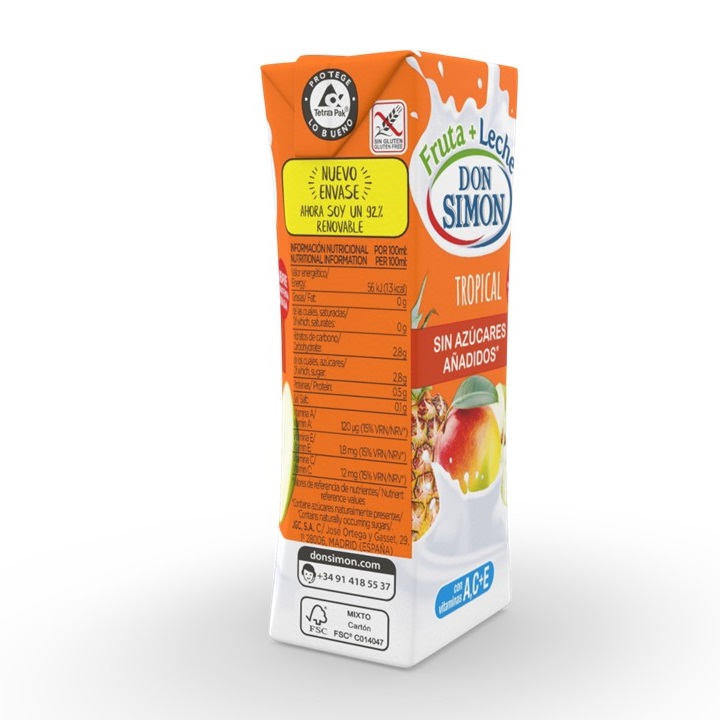
Tetra Pak, together with leading Spanish beverage producer García Carrión, has launched the Tetra Brik® Aseptic 200 ml Slim Leaf carton featuring a paper-based barrier for juice, under the flagship Don Simón brand. This is the first juice portion pack globally to use the innovative barrier and the first such package available in Spain.
Made with up to 80% paper, the packaging reinforces its sustainability credentials. The combination of the paper-based barrier with plant-based polymers used in the packaging material coatings, pushes the renewable content to a remarkable 92%, while reducing the carbon footprint by 43% compared with an aseptic package that uses aluminium foil layer and fossil-based polymers, as verified by the Carbon Trust1.
“We are proud to lead the way in sustainable packaging for the juice category. For more than 135 years, García Carrión has been committed to responsible innovation and respect for the environment,” said Don José García Carrión, President of García Carrión. “This innovation supports our mission to reduce environmental impact while offering high-quality products to our consumers”, added Fala Corujo, Vice President of García Carrión.
For García Carrión, this packaging solution represents a new industrial application of its 360° Sustainability Strategy, recognised with the Factories of the Future Award 2024 for Excellence in Sustainability and Circular Economy.
Tatiana Liceti, Executive Vice President, Packaging Solutions at Tetra Pak commented: “This launch represents a significant step in our journey towards fully renewable and recyclable packaging. By working closely with our customers, we’re proving that sustainable innovation can scale across markets and categories, while ensuring packaging retains its functionality and quality.”
What is the paper-based barrier?
Tetra Pak’s paper-based barrier is a breakthrough in aseptic carton design. It replaces the traditional aluminium foil layer with a renewable, paper-based barrier, promoting the shift from a fossil-based material to a low-carbon, renewable alternative and reducing package’s carbon footprint. Together with other layers in the packaging, the paper-based barrier protects against oxygen, light, moisture and bacteria ensuring food safety is not compromised, and shelf life is comparable to packages with the aluminium foil layer. Aseptic cartons with a new paper-based barrier can be collected, sorted, and recycled where recycling infrastructure is in place, at scale. The new paper-based barrier is expected to deliver additional benefits downstream for recycling infrastructure efficiency. These include maximising the recovery of paper content from the recycling process of carton packages, while ensuring high-quality fibre and non-fibre fractions.
Tetra Pak’s paper-based barrier technology is part of its broader ambition to create the world’s most sustainable food package – one that is paper-based, made solely from responsibly sourced renewable or recycled materials, has the lowest possible carbon footprint and is fully recyclable2.
Tetra Pak’s aseptic beverage carton with a paper-based barrier was launched in collaboration with a dairy company in Portugal in 2023. It was recognised as a groundbreaking innovation in sustainable packaging, receiving the "Resource Efficiency" award at the Sustainable Packaging News Awards 2024.
Media contacts
Marcin Pawelec
PR Manager - Packaging
Marcin.Pawelec@tetrapak.com
1Source: Carbon Trust™- verified Tetra Pak ‘Carton CO2 Calculator’ model version 11 (valid from 2025-01-01). Scope: cradle-to-grave measurement of a Tetra Brik® Aseptic 200 Slim Leaf carton with plant-based polymers in coating and paper-based barrier compared to a Tetra Brik® Aseptic 200 Slim Leaf package with aluminium foil layer and fossil-based polymers. Geography: EU Industry data.
2This means creating cartons that are fully made of renewable or recycled materials, that are responsibly sourced, therefore helping to protect and restore our planet's climate, resources and biodiversity; contributing towards low carbon production and distribution; are convenient and safe, therefore helping to enable a resilient food system; are fully recyclable.