
The sourcing of raw materials represents our most significant impacts on nature in our upstream value chain. These impacts are driven by land and water use, pollution and climate change, which are also closely connected to human rights impacts.
A key focus area in our Approach to Nature is the responsible sourcing of our raw materials, with a target for those with the most significant land footprint – paper-based materials, plant-based polymers and aluminium foil – to originate from certified and other controlled sources, and to drive the traceability of those materials to either the point of production or sourcing area.
Paperboard
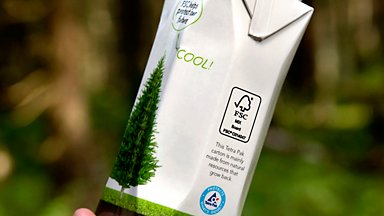
We are committed to sourcing paperboard only from areas that are free of deforestation, which is a significant cause of nature loss and a risk to our business. We source paperboard from areas certified by the Forest Stewardship Council (FSC), and our suppliers are required to report annually on the paper mills, tree species, certification status and the country and region of origin of the wood fibre used in the paperboard supplied to us. In 2025, we sourced nearly two million tonnes of paperboard, 100% of which came from FSC certified forests or other controlled sources.

Aluminium and plant-based polymers
We apply the same due diligence to aluminium and plant-based polymers. When sourcing aluminium, we work with suppliers certified according to the Aluminium Stewardship Initiative (ASI) Performance Standard. In 2025 Tetra Pak sourced 72% of aluminium foil volumes as ASI Aluminium. The plant-based polymers in the plastics used in our products are Bonsucro-certified, supporting sustainable sugarcane production.

Working with our supply chain
We also work with our raw material supply chains to address pollution risks across soil, air and water. We specify procurement requirements in our Supplier Code and engage with our suppliers concerning nature impact through our Join Us In Protecting the Planet (JUIPP) initiative.




1 Scope: cradle-to-grave measurement of a Tetra Brik® Aseptic 200 Slim Leaf carton with plant-based polymers in coating and paper-based barrier compared to a standard Tetra Brik® Aseptic 200 Slim Leaf package. Geography: EU Industry data. Source: Carbon Trust™-verified Tetra Pak ‘Carton CO2 Calculator’ model version 9, valid from 2023-01-01