
Tune in to the trends and unlock your potential
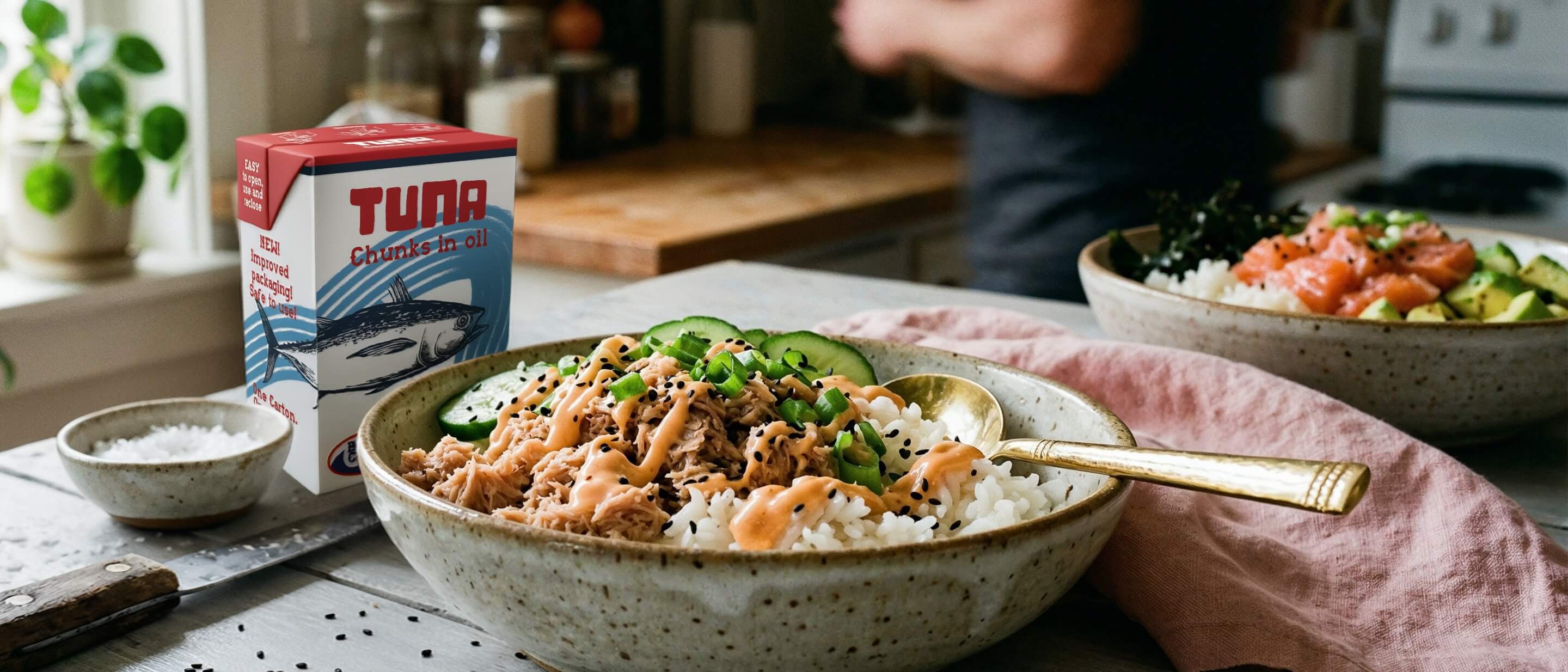
Many consumers are looking for products that can contribute to a healthy, balanced diet, and there’s a growing preference for foods that serve as a source of protein. These factors, along with the demand for convenience that comes with increasingly busy lives, mean that shelf-stable tuna is in a great position. It’s already a staple category, but with steady growth predicted as well as increasing innovation with both the product and the packaging, there’s huge potential to make a splash with exciting new ideas that capitalise on growing trends.
Shelf-stable tuna: a long history, and an exciting future
With over a century of history, shelf-stable tuna has long been a staple in diets all over the world. Its origins are thought to date back to 1903, where a fisherman, Albert Halfhill, had seen shrinking sardine stocks, so instead explored other options. Thanks to a plentiful supply of albacore tuna in local waters, he packed empty sardine cans with this fish instead.
From there, the popularity of canned tuna grew, and is now amongst the most consumed fish globally as well as being an industry that’s worth billions of dollars.1 It’s a very well-established product with a recognisable shelf presence that’s most commonly sold in oil, water or brine, and most often found in cans.
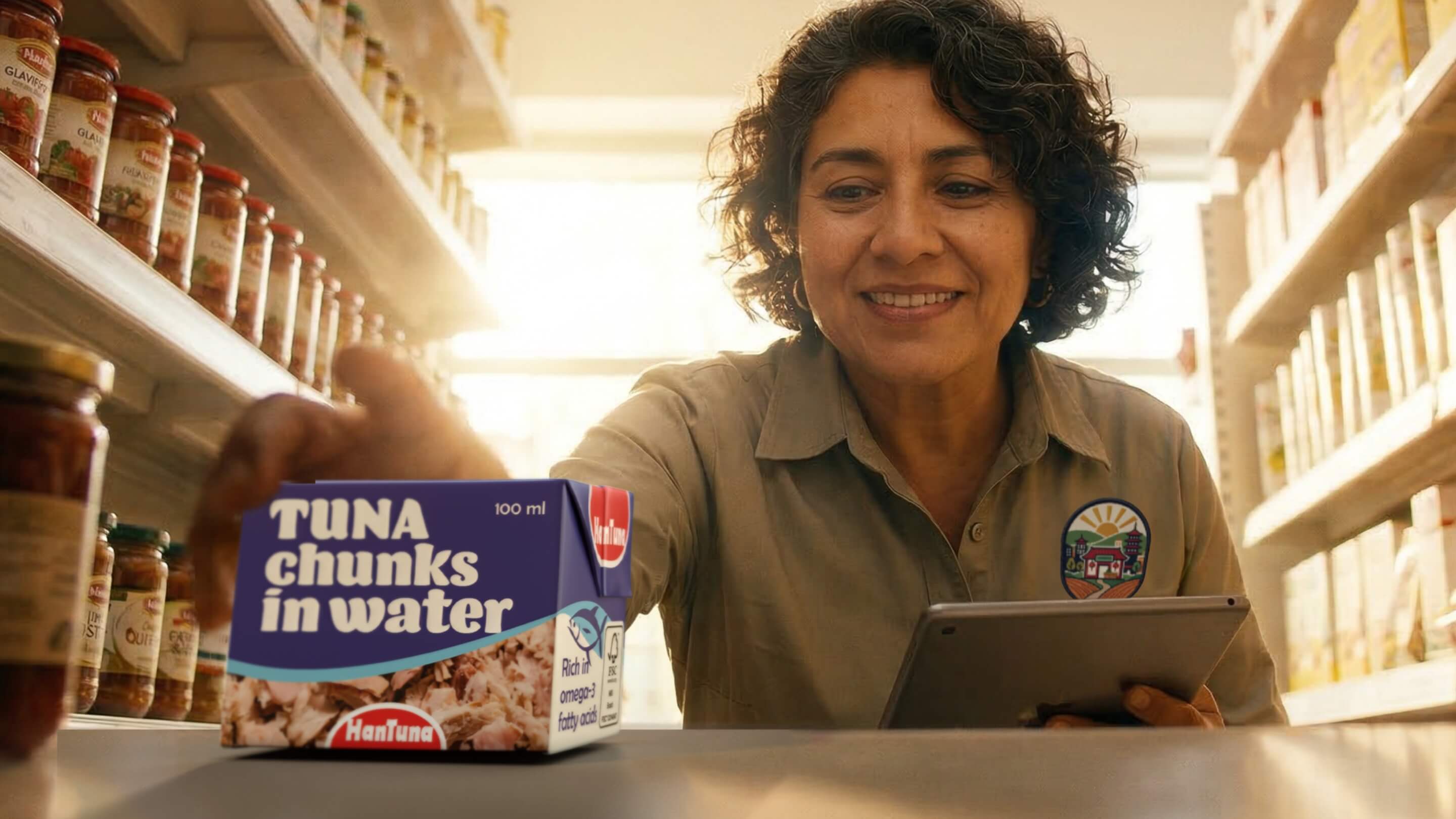
However, there is a lot of potential for new products and innovations. It’s a category that continues to grow at a steady rate, and consumer demands are evolving. Some are looking for packaging alternatives that reduce climate impact, others are looking for interesting ingredients and inspiration.
What are the trends that have the most potential for your business? Let’s dive in.
The state of shelf-stable tuna
With over 11 billion units sold in 2025, and with 2.2% projected compound annual growth rate (CAGR) between 2025 and 2030,2 the shelf-stable tuna category is booming, and it shows no signs of slowing down.
It’s a category that is dominated by cans, where small formats can either be bought separately or as multipacks. There are signs of other packaging options becoming more popular, especially in North America where flexible sachets make up more than 30% of the total market.3


The many types of tuna
Shelf-stable tuna doesn’t just mean one specific type of product, as there are many types of tuna. First, there are the different species, including albacore, skipjack and bluefin to name a few of the more popular options.
Then there are the product varieties. Tuna can be classed as shredded, flaked, chunks, tuna salad or solid. Tuna salad is a pre-mixed product which combines tuna with other ingredients as a ready-to-eat snack. The other types are pieces of tuna of varying sizes.
{"chart":{"type":"pie","chartType":"donutChart"},"title":{"text":"Market share by form (2025)
","align":"left"},"subtitle":{"text":"<p>Global market size (2025) = 11,139.6 Mn units</p>\r\n","align":"left"},"tooltip":{"pointFormat":"'{series.name}: <b>{point.percentage:.1f}%</b>"},"series":[{"colorByPoint":true,"data":[{"name":"Chunks","y":40.4,"color":"#023f88"},{"name":"Solid","y":23.5,"color":"#777777"},{"name":"Flakes","y":23.8,"color":"#F58220"},{"name":"Shredded","y":5.9,"color":"#8DC63F"},{"name":"Tuna salad","y":6.4,"color":"#00bdf2"}],"innerSize":"60%"}],"legend":{"layout":"horizontal","align":"left","verticalAlign":"top"},"accessibility":{"point":{"valueSuffix":null}},"exporting":{"buttons":{"contextButton":{"enabled":false}}}}
Source: Shelf-Stable Tuna Market Assessment Study, Meticulous, 2025
{"chart":{"type":"column"},"title":{"text":"Predicted growth by form","align":"left"},"subtitle":{"text":"<p>Predicted CAGR 2025-2030</p>\r\n","align":"left"},"yAxis":{"min":0,"title":{"text":"Predicted CAGR % (2025-2030)"}},"tooltip":{},"xAxis":{"crosshair":false,"categories":["Type of tuna"],"accessibility":{"description":"Type of tuna"}},"legend":{"layout":"horizontal","align":"left","verticalAlign":"top"},"series":[{"name":"Tuna salad","data":[3.7],"color":"#00bdf2"},{"name":"Chunks","data":[2.7],"color":"#023f88"},{"name":"Flakes","data":[2.2],"color":"#F58220"},{"name":"Shredded","data":[1.7],"color":"#8DC63F"},{"name":"Solid","data":[1.2],"color":"#777777"}],"exporting":{"buttons":{"contextButton":{"enabled":false}}}}
Chunks – larger pieces that are distinct pieces of meat – have a global market share that exceeds 40%, and this is the product type consumers are most familiar with. However, the fastest-growing segment is tuna salad. Here, there is a lot of potential to explore, thanks to a combination of increased product flexibility with additional ingredients and the relatively modest market share it has today.
Whichever kind of tuna you choose, there is an audience, and that audience will have a range of needs and demands.


Harness wellness
With almost 70% of consumers actively looking for products that are sources of protein multiple times a week,5 and with 46% of US consumers eating fish for its quality protein content,6 it makes sense that shelf-stable tuna, itself rich in protein, continues to capture the attention of consumers all over the world.

Shelf-stable tuna is high in protein, vitamins and minerals, and it’s a source of omega-3 fatty acids, and these tend to be the claims consumers look for most when buying fish and seafood.
| Purchase decisions are influenced by claims. For fish and seafood: | |||
 | 31% of consumers are looking for protein. | | 31% of consumers are looking for omega-3/6.7 |
Consumers are also wary about heavy metals like the mercury found in some fish, with 31% of US consumers citing it as a concern.8 Some brands are highlighting and addressing this with the labelling, but there is more room for transparency and this could strengthen the relationship between your brand and your consumers.

Consumers already perceive shelf-stable tuna as a protein-rich product that contributes to a healthy diet, but this can still be reinforced with positioning and on-pack communication. It’s also increasingly important to show where your products come from, how the fish are caught, and how you’re addressing climate impact.
With this in mind, why not explore alternative packaging that speaks to your sustainability credentials? Or an option that has ample space for you to tell your story?
Add more value
With rising cost of living and concerns around inflation, it’s understandable that consumers are placing more emphasis on value for money. Products that offer more for less can make an impact, and retaining quality is essential.

Around a third of US consumers look for value packs from fish brands.9
Tuna can help meet these needs, as it’s seen as an affordable food that also has a long shelf life. The ability for brands to combine value with communication around sustainable sourcing and quality is a major benefit.
Private label potential
As today’s tuna market is dominated by brands, there’s significant potential for private labels to further improve affordability while maintaining desired standards. Private labels already match many branded options in terms of quality and certifications.10 With the right product and right approach, there’s a real opportunity to grab the attention of your consumers.

A different approach
Standing out in this competitive category is key, and there are many ways to do this. It could mean offering a shelf-stable tuna product with an interesting twist of flavour, or one that prioritises functional benefits. You could even stand out by choosing to go with a package that’s a completely different shape and profile to the usual round containers, potentially positioning the product as a premium option without the premium price tag.
Fishing for convenience
Increasingly busy lifestyles mean many consumers appreciate products that can help them save time on meal preparation without compromising on quality or enjoyment. More than half of UK consumers buy fish products precisely for this reason.
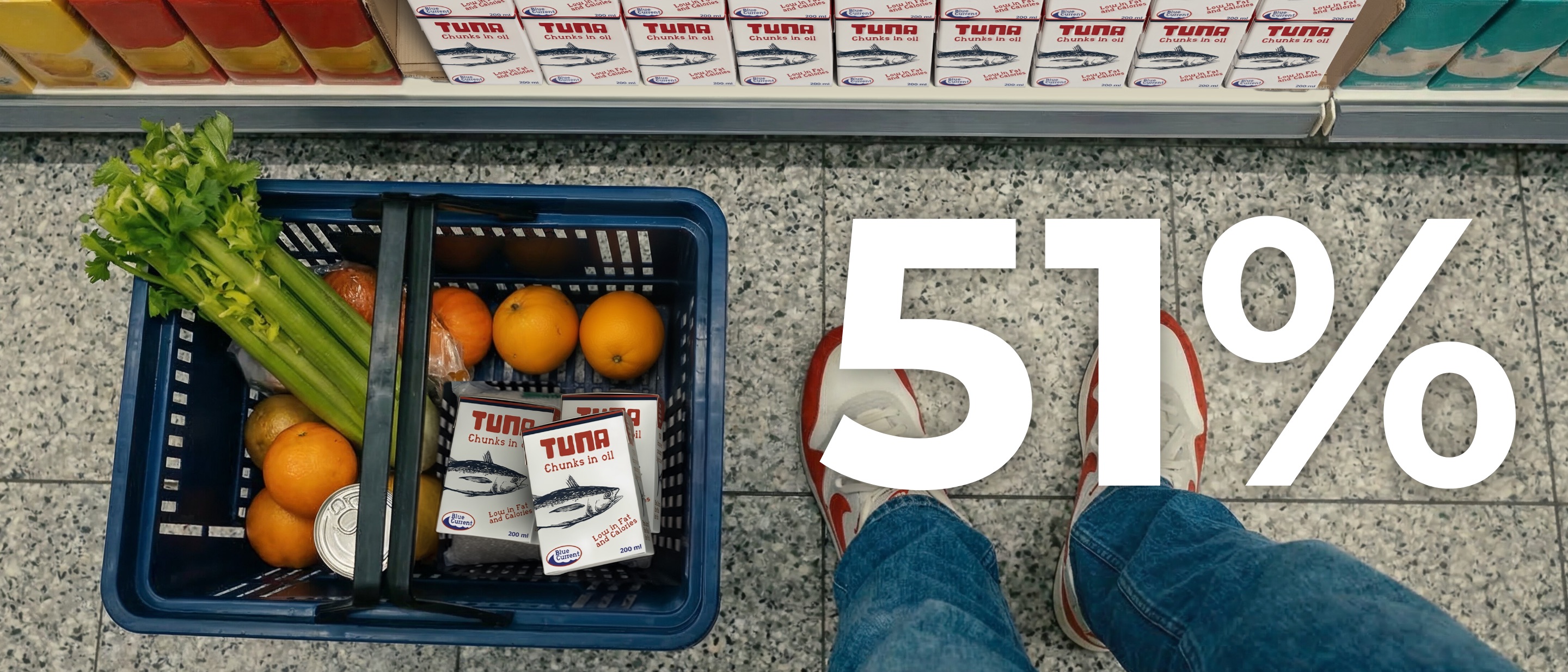
For 51% of UK consumers, fish products being easy to cook was one of the most important factors in the purchase decision.11
A splash of flavour
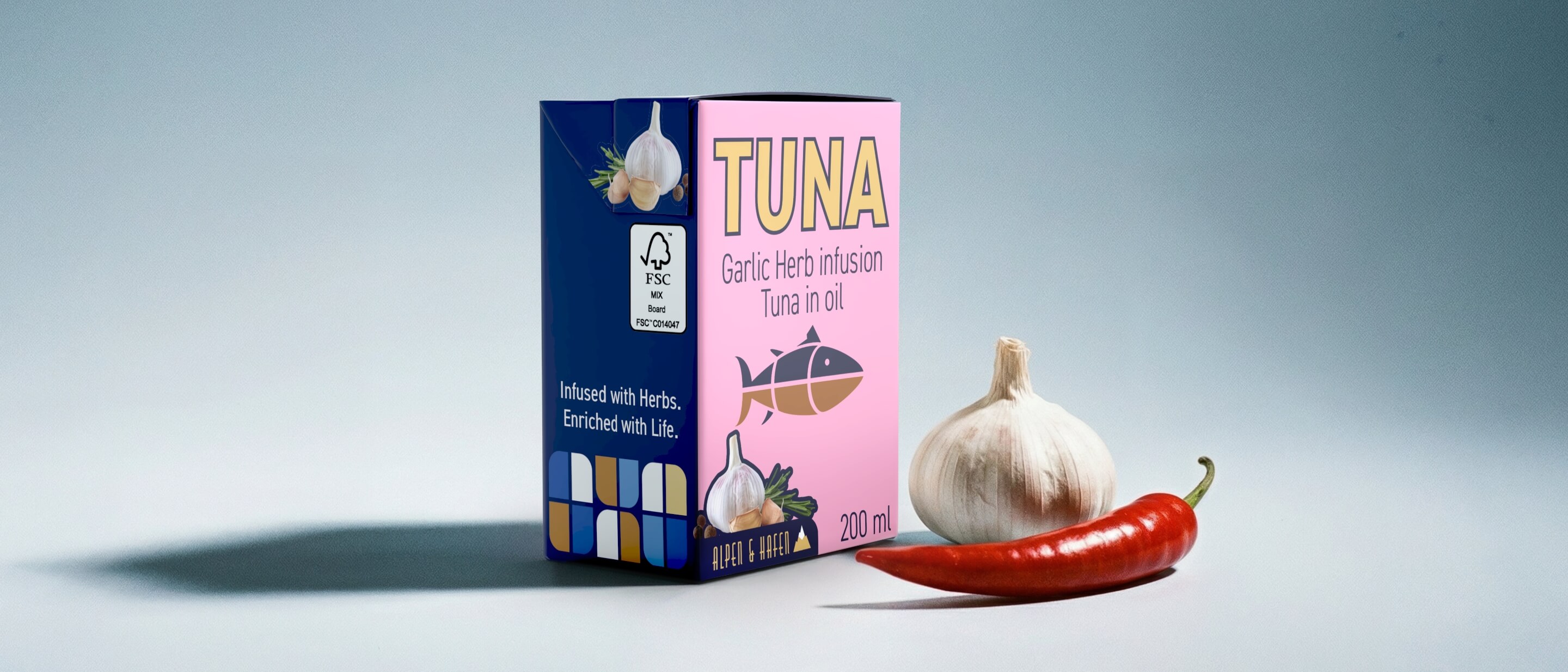
Many brands are simplifying things for consumers even more, by adding flavours or seasoning to shelf-stable tuna products. This can save even more time, and it can also add variety and excitement to a heavily commoditised category.
Ahead of the pack
Packaging is playing an increasingly important role in the popularity of tuna products, as consumers value practicality and simplicity. More than one in five products are already positioned as being easy to use,12 but there is an opportunity here to stand out. Differentiation can be a deciding factor – people are already aware of the convenience and the inherent flaws of traditional packaging, so maybe it’s the right time to introduce something truly new.
The popularity of different package sizes also paints an interesting picture. 100 g – 200 g are the most popular formats, but packages that are smaller than 100 g are the fastest growing, with 2.7% CAGR predicted between 2025 and 2030.13 This is thought to be driven by single-serve, snackable, and on-the-go trends, as well as the rise in single-person households.
{"chart":{"type":"column"},"title":{"text":"Global shelf-stable tuna market size, by pack size","align":"left"},"subtitle":{"text":"<p>Predicted CAGR% (25-30): <100 is <b style=\"font-size: 0.8125rem;\">2.70%</b>, 100-200g is <b style=\"font-size: 0.8125rem;\">2.10%</b> and >200g is <b style=\"font-size: 0.8125rem;\">1.50%</b></p>\r\n","align":"center"},"yAxis":{"min":0,"title":{"text":"Million units"}},"tooltip":{},"xAxis":{"crosshair":false,"categories":null,"accessibility":{"description":"Pack size"}},"legend":{"layout":"horizontal","align":"left","verticalAlign":"top"},"series":[{"name":"<100 g","data":[3093.3],"color":"#023f88"},{"name":"100-200g","data":[6782.5],"color":"#00bdf2"},{"name":">200g","data":[1263.9],"color":"#b9e5fb"}],"exporting":{"buttons":{"contextButton":{"enabled":false}}}}
The importance of environmental credentials
While many consumers are concerned about the environmental impact of the products they buy, it’s still a challenge for a large proportion of them to decide which information is most relevant to their concerns.
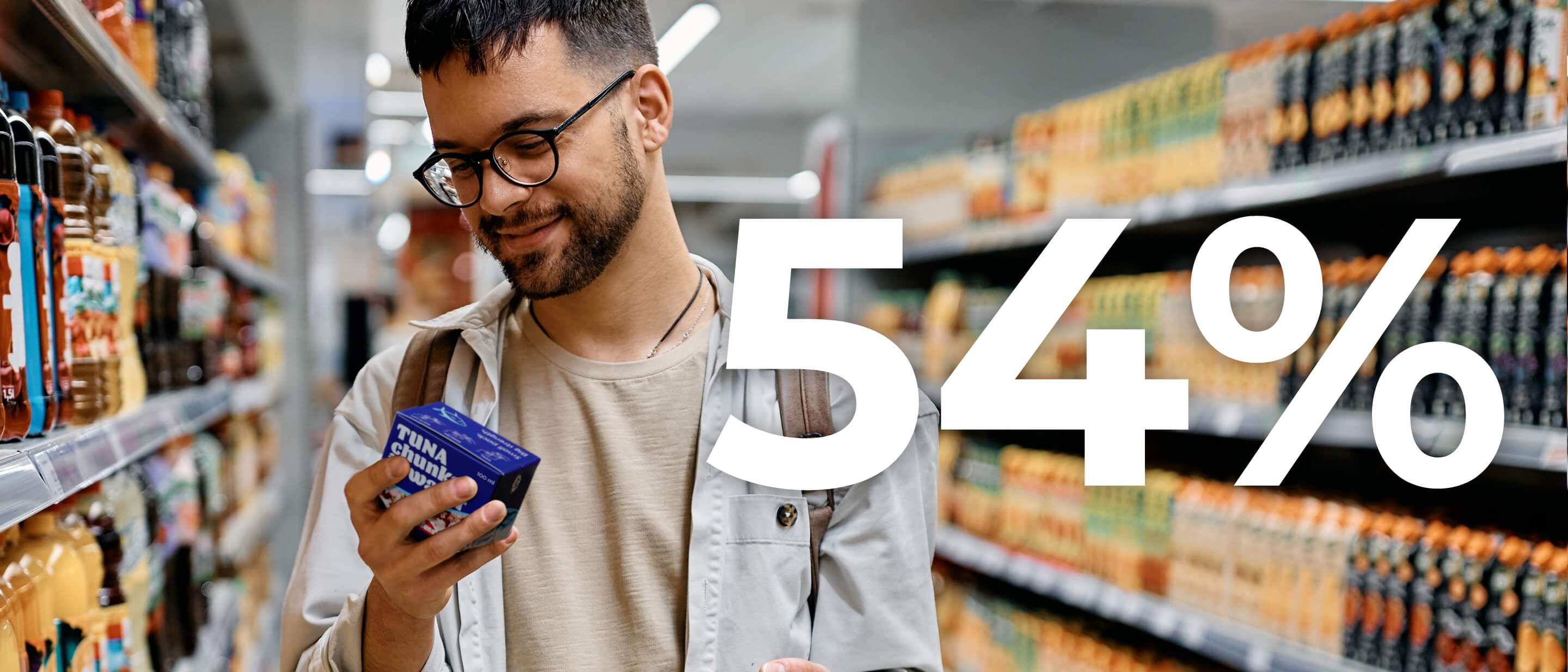
54% of consumers globally think there are too many environmental labels, and they don’t know what to look for.14
It’s clear that it’s not only the labelling and credentials themselves that are important, but also the clarity of communication. In addition, 65% of consumers globally say it would be easier to recycle packaging if labels had clearer instructions as to how,14 which presents a great opportunity for brands to innovate with packaging while being very clear as to why that innovation makes a difference from a climate standpoint.

Communication and transparency go hand in hand, and consumers want to know more about every part of a product, from how the fish is caught to how the packaging is sourced.
Many brands are addressing this, with 42% of shelf-stable tuna products making a variety of ‘sustainable fishing’ claims.15 Typically, these include information on sustainable practices designed not to disrupt the marine ecosystem.
However, this is only part of the story. Consumers also care about the packaging itself, and packaging with a high proportion of renewable content or FSC™-certified materials can help boost the environmental profile of shelf-stable tuna even further, helping increase appeal amongst concerned consumers.
Ingredient innovation
Shelf-stable tuna is often used as a convenient ingredient, but there’s also potential for it to be seen as a ready-to-eat option. This can help to revitalise the category while also meeting consumer demands around convenience together with the desire for enriched experiences.
How can this change in perception be achieved? Introducing new flavours to classic staples can transform an ingredient into a healthy snack.
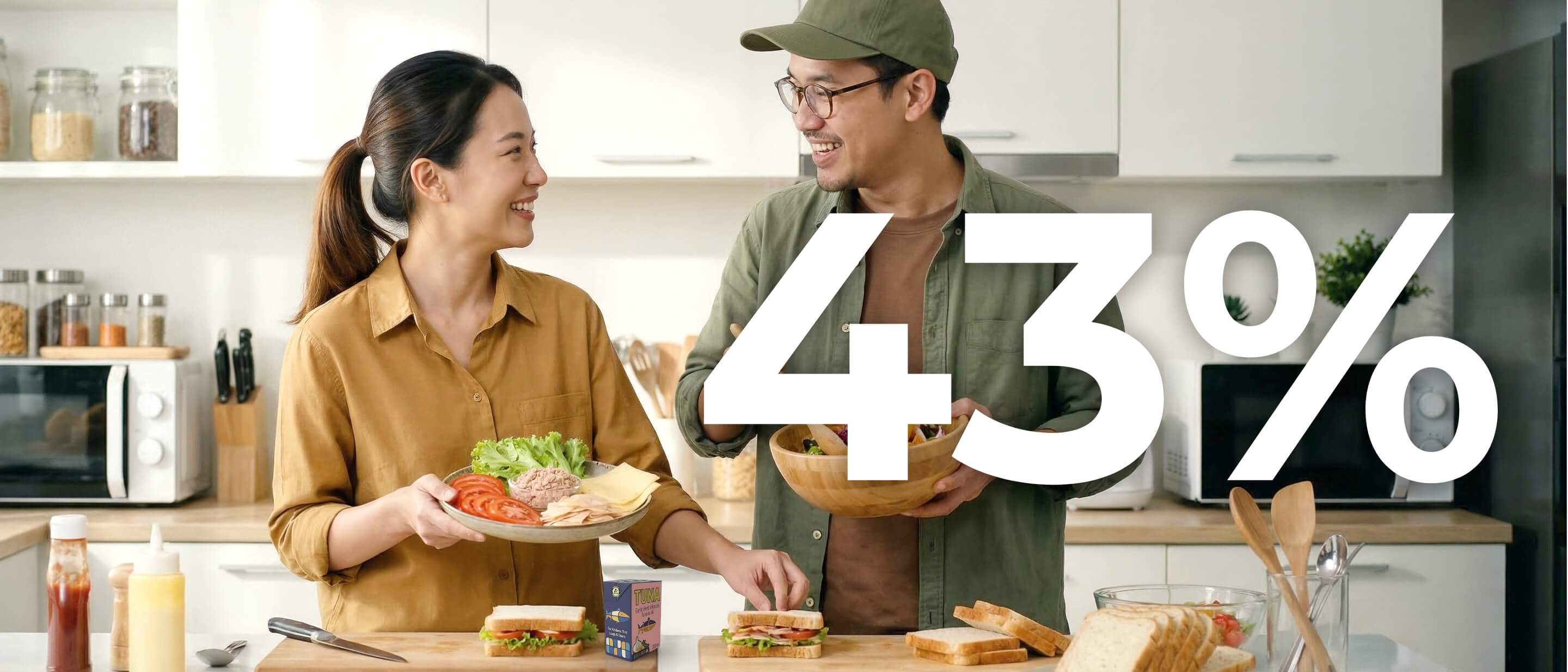
43% of consumers, globally, are influenced by taste/flavour as an important attribute while purchasing fish & seafood products.16
Expand with experimentation
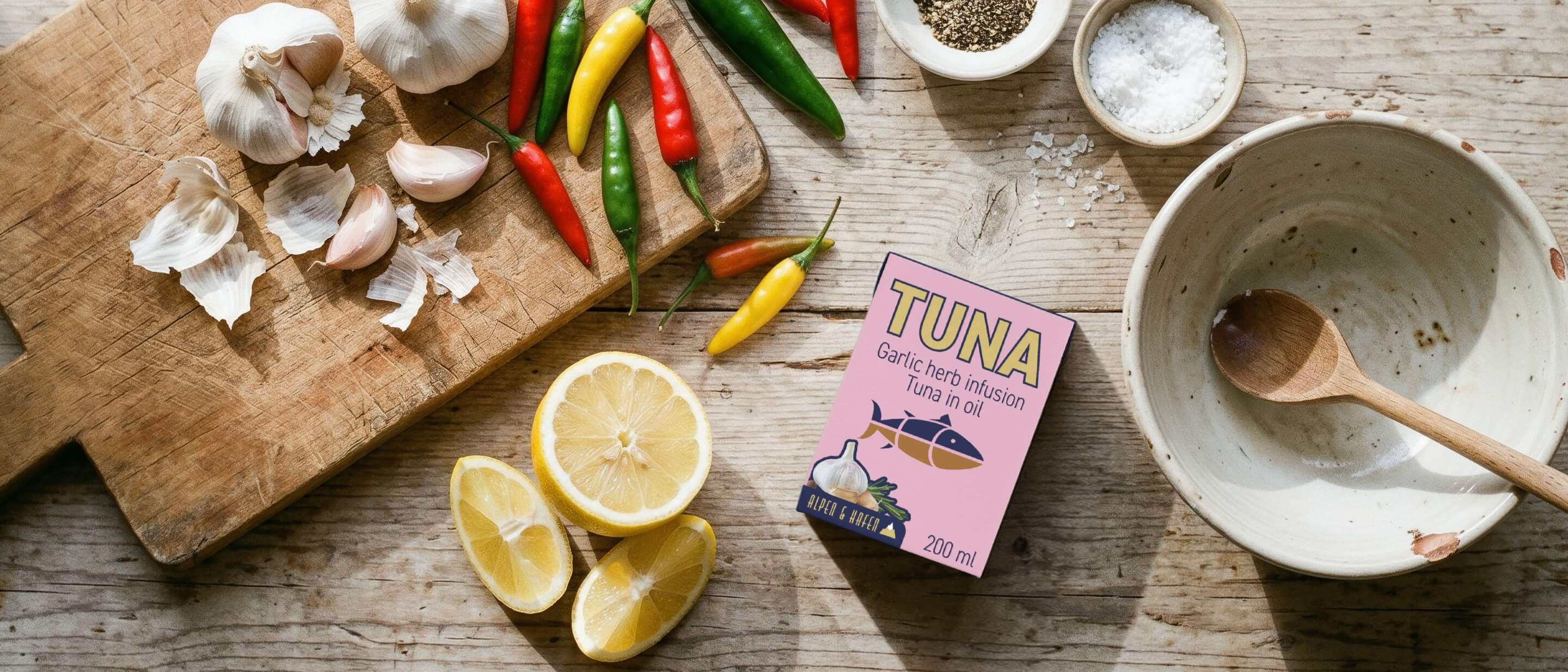
Adding flavours and ingredients to shelf-stable tuna is a great opportunity to attract new audiences and can excite your existing consumers. Chilli is amongst the more popular ingredients, along with lemon and pepper or a simple salt seasoning, but there’s almost endless room for innovation.
The key is to create a whole experience, so an exciting new tuna product could be the ideal opportunity to try an exciting new package to go with it. Something different would help to reinforce innovation, and a paper-based package would not only stand out on the shelf, but would also keep your product ahead of paperisation trends.

As a category that’s already significant and still growing, being in tune with tuna consumers can help you boost business and offer products that meet evolving demands and exceed expectations when it comes to flavour and value.
It’s now possible to pack tuna in Tetra Recart® – the game changing solution for food. This is one way to ensure any shelf-stable tuna product grabs consumer attention, but that’s only the beginning when it comes to benefits. We can help you every step of the way from product concepts to launch. Get in touch today and we can explore an ocean of opportunity together!
Sources
1. https://www.fortunebusinessinsights.com/industry-reports/tuna-fish-market-100744
2. Global Shelf-stable Tuna Market Assessment Study, Tetra Pak, October 2025
3. Mintel, GNPD, Dec 2024-Nov 2025, ambient Tuna with Format Type matches one or more of Block/Cubed; Shredded/Minced
4. Mintel, Fish and Shellfish, UK, 2025; Fish and Shellfish, US, 2025
5. https://hra-global.com/news/category-expertise/protein-now-a-lifestyle-not-a-niche/
6. Mintel, Fish and shellfish, UK, 2025; Mintel, Fish and Shellfish, US, 2025; Dynata/Mintel, August 2022
7. Innova Database, Innova Category Survey 2024 (Fish & Seafood – Average of 35 countries) *The percentages given are for consumers globally
8. US: 1,822 internet users aged 18+ who have consumed fish or shellfish at home in the last three months Source: Kantar Profiles/Mintel, January 2024
9. Mintel, Fish and Shellfish, US, 2025
10. Shelf Stable Tuna Market Assessment Study, Meticulous, 2025
11. Mintel, Fish and Shellfish, UK, 2025
12. Mintel, GNPD, Dec 2024-Nov 2025, ambient Tuna with Format Type matches one or more of Block/Cubed; Shredded/Minced
13. Shelf Stable Tuna Market Assessment Study, Meticulous, 2025
14. Innova, What’s trending in canned tuna?, 2024; Mintel, Fish and Shellfish, UK, 2024
15. Mintel, GNPD, Dec 2024-Nov 2025, ambient Tuna with Format Type matches one or more of Block/Cubed; Shredded/Minced
16. Innova Category Survey 2024 (Fish & seafood – Average of 35 countries)