The case for perishable foods

Foods and beverages such as milk, juice and plant-based alternatives are highly perishable and have a shorter shelf life than many other food types. Ensuring food safety while helping reduce food loss and waste and lowering the carbon footprint of the food value chain is increasingly important for the food industry.

Aseptic means free from microbiological contamination. Aseptic packaging systems can keep perishable liquid foods safe and flavourful for months without refrigeration or preservatives while retaining their colour, texture, taste and nutrition.

Our aseptic processing and packaging solutions help protect perishable foods, extend shelf life and support access to safe nutrition by making food safely available to consumers across vast distances. In 2025, 68 million children in 52 countries received nutritious beverages in Tetra Pak packages through school feeding programmes, including in communities with limited refrigeration infrastructure.

Learn more about our aseptic solutions

Sustainable packaging in the European Union

At a time when over a third of food produced globally is lost or wasted1, extending shelf life and protecting perishable foods is increasingly important. Today, 154 billion litres of perishable liquid foods, such as juices, milk and plant-based alternatives, are consumed in the EU each year2 – roughly 300 litres per person. The food industry chooses beverage cartons for about 59% of juices, 75% of milk and a major share of dairy alternatives in the EU3. If not aseptically processed and packed, perishables must be kept in the cold chain, with a shorter shelf life. 


European policymakers have recently revised the legislation regulating packaging for this type of food in line with the EU Green Deal4 ambitions aiming to make food systems sustainable and resilient while supporting reductions in food loss, food waste and carbon footprint.

The revision focuses on reducing packaging waste, increasing the reuse and recycling of packaging, and using plastic recycled content in packaging in line with the EU Circular Economy Action Plan and the European Green Deal objectives. By 2030, all packaging placed on the EU market should either be recyclable or reusable.
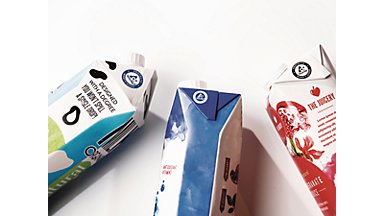
Top view of juice cartons

Packaging: Recyclable or Reusable?

To learn more about the environmental and economic impact of packaging perishable liquid foods in recyclable aseptic beverage cartons versus reusable packaging alternatives, we asked consultancy Steward Redqueen to undertake comparative studies for both milk and orange juice. These studies drew on data from six major European markets.

In the case of milk, the study found that switching from aseptic beverage cartons to reusable packaging alternatives could lead to increased CO2 emissions, higher milk prices for consumers and economic losses across the value chain, including for farmers. Click here to download the study.

The orange juice study similarly found that the switch could also increase CO2 emissions and consumer prices, possibly leading to a reduction in orange juice consumption and a market contraction.

Someone holding empty carton over recycling bin

Download our infographics to learn more

Aseptic filling technology combined with innovative packaging, including aseptic paper-based beverage cartons, keeps food and beverage safe and flavourful up to 12 months without the need for refrigeration or preservatives. Learn more about the importance of aseptic technology in protecting and preserving food.

pouring juice from carton to glass

Juice

Aseptic juice processing and packaging help extend the shelf life of perishable foods, safeguarding against microbial spoilage and quality deterioration.
girl drinking milk from carton

Milk

The way milk is subsequently processed, packed and handled throughout the value chain impacts food safety, shelf life, and the risk of food waste.
rice drink in tetra pak carton

Plant-based drinks

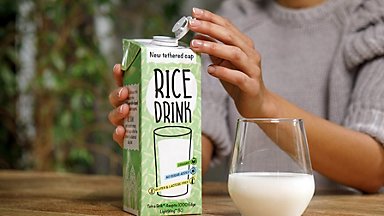
Plant-based beverages require specialised processing and packaging solutions. There are key food safety and availability considerations to address.

Why do European juice producers choose aseptic systems?


In juice production, the aseptic process of heat treatment, filling and packaging at the food producer maintains the absence of harmful microorganisms across the entire distribution chain until consumption5.

This helps extend the shelf life of perishable foods and beverages, minimising loss and waste.

Challenges without aseptic packages

A chart showing the decrease in shelf life of perishable foods

1. Shorter shelf life

1. Shorter shelf life

Food and beverages that would have been preserved by aseptic technology will no longer benefit from an extended shelf life. The shelf life of these perishable foods will go down from 6-12 months to 1-4 weeks if packaged using non-aseptic solutions.
An illustration of pathogens

2. Increased growth of pathogens posing a health risk

2. Increased growth of pathogens posing a health risk

Food and beverages need to be at pH <3.7 and kept at <4°C along the whole food value chain to exclude at least bacterial foodborne pathogens6,7. To achieve this today, without use of aseptic technology, would require a redesign of the entire perishable liquid foods distribution chain.

A chart showing the carbon footprint of beverage cartons

3. Carbon impact

3. Carbon impact

Due to their high share of renewable materials, aseptic beverage cartons score better from a climate impact perspective when compared to other packaging solutions, with a carbon footprint of only 83g CO2 equivalents per litre (eq/l) compared to 430g CO2 eq/l for single-use glass bottles, 156 CO2 eq/l for PET bottles and 100g CO2 eq/l for reusable glass bottles.
An image representing EU food waste per citizen

4. Increased risk of additional food waste

4. Increased risk of additional food waste

Keeping perishable foods safer for longer means the risk of food waste is lowered when compared to non-aseptic technologies. Each EU citizen already wastes 131 kg8 of food per year on average, and the likelihood is that this would increase without aseptic processing and packaging.

Going beyond food protection and waste reduction

Beverage cartons play a crucial role in global food systems, helping make food safe and available, everywhere. Through the use of renewable plant-based materials and post-use recycling, they help reduce the carbon impact while also contributing to food waste reduction.

Packaging solutions

Recyclable beverage cartons contribute to resilient supply chains while supporting more sustainable packaging solutions. The share of renewable materials in cartons (70% on average) can lower their carbon footprint compared to alternatives9. Our plant-based portfolio featuring plant-based plastics is growing every year.

Recyclable materials

Beverage cartons are recycled at scale within the EU, at a >50% recycling rate with a commitment to increase this to 90% collected for recycling and 70% recycled by 2030. To that end, the industry has invested approximately €200 million into increasing recycling capacity in the EU and plans to invest a further €120 million by 2027. In 2025, we invested approximately €100 million into the research, development and industrialisation of new carton technologies, alongside a further €42 million to expand collection and recycling infrastructure globally.

Recycled content

Where suitable food-grade recycled plastic is available, increasing recycled or plant-based content in packaging can contribute to a circular economy10 without compromising food safety. Tetra Pak has pledged to incorporate a minimum of 10% recycled plastic, on average, across our carton packages sold in Europe by 2030. Innovative solutions will be required to increase recycled content in aseptic cartons. In 2025, Tetra Pak became the first food and beverage packaging company in India to deploy packaging material with ISCC PLUS certified recycled polymers sourced and produced locally.

Further reading

Tetra Pak Sustainability Report

Our Sustainability Report provides a comprehensive picture of how we collaborate across the globe to contribute to the sustainable development of our industry.

Women eating salad

Taking an integrated view on sustainability

The sustainability challenges we face on our planet are all interconnected and, together, contribute to climate change. Therefore, we need to understand the complexity of the challenges and not try to solve one problem while creating another.

Contact us

hands holding ipad

Find out how we can help you lead the sustainability transformation.

Purpose of contact

Error - please enter purpose of contact

Contact us

Summary

Purpose of contact

Contact information

First name is mandatory
Last name is mandatory
Error - please select your country or region

Contact us

Summary

Purpose of contact
First name
Last name
Work e-mail
Country/Region
Something went wrong. Please try again.

How can I help you?

Please describe your enquiry using maximum 1000 characters. The message is mandatory.

Save One Third. (n.d.). Retrieved from http://www.saveonethird.org.

2 Key figures on the European food chain, Eurostat, 2021.

2018 Liquid Fruit Market Report, AIJN, 2018; Impact assessment study of an EU-wide collection for recycling target of beverage cartons, ACE, 2022;

A European Green Deal, European Commission, 2019.

Tetra Pak Orange Book.

6 Extended shelf life milk-advances in technology, Rysstad and Kolstad, 2006.

7 Growth of food-borne pathogens Listeria and Salmonella and sporeforming Paenibacillus and Bacillus in commercial plant-based milk alternatives, Klaudia Bartula, Máire Begley, Noémie Latour, Michael Callanan, FOOD MICROBIOLOGY, 2023.

8 Eurostat, 'Food waste per capita in the EU remained stable in 2021'.

Supporting evidence - Environmental performance of beverage cartons, Circular Analytics, 2020.

10 The circular economy is a systems solution framework that tackles global challenges like climate change, biodiversity loss, waste, and pollution. – Ellen MacArthur.