
The world’s forests play a vital role in supporting biodiversity and storing carbon. Yet they continue to disappear at an alarming rate, often due to conversion of natural areas for agriculture and urban development.
Land restoration can help counter this trend, assisting in the recovery of ecosystems that have been degraded or destroyed, generating lasting benefits for nature, climate and local communities alike.
In 2022, Tetra Pak, in partnership with Apremavi, launched Conservador das Araucárias (Araucaria Conservation Project), a land restoration project aimed at recovering a portion of the Araucaria moist forest within Brazil’s Atlantic Forest. This subtropical, mountainous region has been severely affected by modern nature loss – only 3%1 of its original area is preserved – and was carefully selected after thorough analysis to identify an at-risk area where restoration could have the greatest impact.
Martin Carlsson, Nature Manager at Tetra Pak, explains:
“The benefits are already visible. Young trees are taking hold and the forest is starting to re-emerge. Restored areas have gone from basically a grass field to medium-sized plants. The speed of growth in the area is remarkable.”
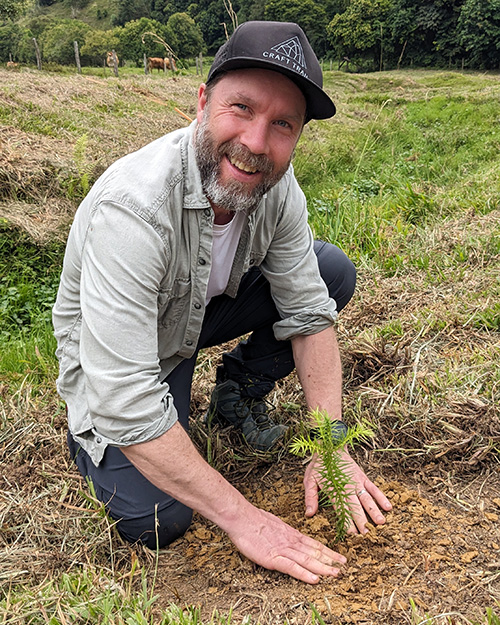
Martin Carlsson, Nature Manager at Tetra Pak
After four years of work, the project has reached the halfway point in its goal to put 7,000 hectares of land under restoration. To reach that milestone, 550,000 seedlings have been planted from more than 50 native species, including Pessegueiro-Bravo, Goiaba-serrana and the endangered Araucariá tree itself.
Our partner in the project, Apremavi, is a Brazilian NGO with nearly 40 years’ experience in restoration and conservation. Reforestation is often seen as a simple solution, synonymous with “planting trees” – but that alone will often fail to return the ecosystem to its natural state. So Apremavi adapts its approach for each area, including seedling planting, direct seeding, ecological enrichment of secondary forests and natural regeneration.
“With over 3,500 hectares now under restoration and conservation, our progress is inspiring. Rural landowners are joining forces to restore the Araucaria Forest, proving that sustainable development thrives when rooted in nature-based solutions,”says Wigold Schäffer, Project Co-ordinator, Apremavi.

“Our goal is more than just planting trees; we are breathing life back into a vibrant ecosystem and safeguarding the well-being of future generations.”
The project relies exclusively on the reintroduction of native species, helping to restore ecological balance naturally by reducing soil erosion and retaining moisture, reintroducing essential food sources for native wildlife and attracting pollinators. In the long run, the restored areas will be integrated into ecological corridors, contributing to reducing pressure on endangered wildlife.
Paving the way to more resilient food systems
This is important because nature is essential to keeping the critical middle of the food value chain functioning. From sourcing raw materials for packaging solutions to powering the technologies that bring food to market, our industry depends on healthy ecosystems, reliable access to water, and predictable environmental conditions.
Tetra Pak is actively committed to being at the forefront of the efforts to protect and preserve nature. Our work to help halt and prevent nature loss is outlined in our Approach to Nature, which defines concrete areas for action and includes a focus on land restoration to help tackle the fundamental drivers of biodiversity loss and nature stress.
Bringing people together
Collaboration is key to success, with the Araucaria Conservation Project bringing together the private sector, civil society and individual landowners, who commit to devoting a portion of their landholding to restoration.
“This project allows us to improve the forest and still generate income,” says Sebastião Vanderlinde, a participating landowner in Santa Rosa de Lima. “It gives us a structure, which includes the fencing materials and seedlings, and technical guidance, which is also essential. It’s a complete project that allows us to take a leap in quality and gain years of work.”
Landowners have access to an additional income stream via a financing model providing advance payments based on the areas devoted to restoration through the project. The environmental and societal benefits are also being validated in partnership with Social Carbon, the selected carbon certification standard, for the generation of carbon removals, which will contribute to balancing residual emissions as part of Tetra Pak’s target to reduce emissions across its own operations.
1 Society for Ecological Restoration, Restoring the Araucaria Forest in the Southern Brazilian Atlantic Forest