
The first school milk programme using Tetra Pak packages was introduced in Mexico in 1962 and is still reaching millions of children today. Tetra Pak’s vision, “We commit to making food safe and available, everywhere”, is the aspirational goal that drives our activities so that children around the world can have access to safe nutrition.
We have been collaborating with customers, governments, stakeholders, and NGOs to develop School Feeding Programmes. By offering practical support and sharing expertise, we can contribute to improving access to nutritious beverages, reaching millions of children.
School Feeding and Nutrition Programmes have made a major impact on children’s physical health, development and learning outcomes as, for many children, food at school is often the first meal of the day1.
Ending malnutrition and making healthy food accessible is a critical component of the UN Sustainable Development Goals (SDG 2 – Zero Hunger)2. For us, this means making safe and nutritious food accessible to everyone, everywhere.


Why school milk programmes are important
As one of the most important ways to provide access to nutritious meals, school feeding programmes help combat malnutrition. The meals often incorporate nutrient-dense foods like milk and dairy, and are essential in addressing hunger, malnutrition, access to school and education, and alleviating poverty3. Our experience worldwide has shown how effective school feeding programmes are in improving the nutrition and academic performance of children benefiting from these programmes.
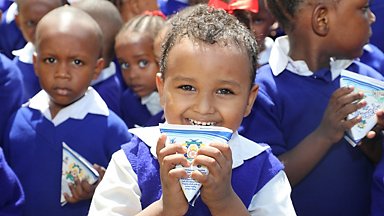
Boosting health and learning outcomes for children
Each school feeding programme is different. Combining our expertise in food safety and quality with the knowledge of local stakeholders, we can provide guidance along the entire food value chain – from sharing best practices in programmes around the world to developing and launching fortified nutritious beverages for the programmes.
School feeding is a good investment. Efficient programmes yield returns of up to US$9 for every US$1 invested, creating value across multiple sectors, including education, health and nutrition, social protection and local agriculture4.

Close to a century of school milk in Mexico
The School Milk Programme in Mexico is one of the longest running programmes in the world and it has made significant contributions to addressing challenges related to malnutrition, education, and food insecurity. School Milk Programmes often provide the first meal of the day for children and the Mexican programme is a flagship example of our work with School Feeding Programmes. That is why we share best practices from here with other programmes in 49 countries around the world, where in 2024 more than 66 million children received milk or other nutritious beverages in Tetra Pak packages.
Close to a century of school milk in Mexico
The School Milk Programme in Mexico is one of the longest running programmes in the world and it has made significant contributions to addressing challenges related to malnutrition, education, and food insecurity. School Milk Programmes often provide the first meal of the day for children and the Mexican programme is a flagship example of our work with School Feeding Programmes. That is why we share best practices from here with other programmes in 49 countries around the world, where in 2024 more than 66 million children received milk or other nutritious beverages in Tetra Pak packages.
Can milk cartons be the backbone of a community?
Milk is renowned for its rich nutritional value – yet over a third of Irish children don’t get enough calcium in their diets. Discover the transformative power of school feeding programmes and their profound impact on children and communities. Get to know more about how we work together for a better nutrition for children.

Food for Development
Tetra Pak Food for Development drives the development of the dairy and food value chain through cooperation with customers, governments, development agencies, funding organisations and NGOs around the world.
Through collaboration with organisations and alliances including the World Food Programme (WFP), Global Child Nutrition Foundation (GCNF), International Dairy Federation (IDF) and UN Industrial Development Organisation (UNIDO), the programme contributes to sustainable food value chains while addressing the global challenges associated with food security and nutrition.


The School Feeding Programme handbook


1 State of School Feeding, 2020. Source: World Food Programme, https://docs.wfp.org/api/documents/WFP-0000124231/download/.
2 SDG Goal 2: Zero Hunger is about creating a world free of hunger by 2030. The global issue of hunger and food insecurity has shown an alarming increase since 2015, a trend exacerbated by a combination of factors including the pandemic, conflict, climate change, and deepening inequalities. Source: United Nations, https://www.un.org/sustainabledevelopment/hunger.
3 Fuel for life – the vital role of school feeding worldwide, 2021. Source: IDF, https://fil-idf.org/news_insights/the-vital-role-of-school-feeding-worldwide/.
4 School Meals. Source: WFP, https://www.wfp.org/school-feeding.