As global temperatures continue to rise, we have a critical role to play in cutting emissions and mitigating the worst effects of climate change.
The big picture
To align with the UNFCCC Paris Agreement goal of limiting global warming to 1.5°C above pre-industrial levels, global emissions needed to peak by 2025. Instead, emissions are still rising, planetary boundaries1 are being crossed and a significant implementation gap exists between commitments and actions. Climate change caused an estimated 3,700 deaths from extreme weather in 2024, while food prices rose sharply around the world.
These impacts come as global food systems must scale up to meet rising demand from population growth. The food industry therefore has a crucial role to play in mitigating climate change.

Material topics
|
|
| Climate change mitigation and adaptation | Energy sources and intensity |


Our role
We recognise our responsibilities as an advanced manufacturer at the heart of the food system. We are working to reduce our environmental impact at every step and have committed to the following targets validated by the Science Based Targets institute to achieve this.
- Goal: 46% GHG reduction across our value chain by 2030, in line with a 1.5ºC Science Based Targets initiative (SBTi) commitment compared to our 2019 baseline.
- Goal: Reach net-zero GHG emissions in our own operations (scopes 1, 2 and business travel) by 2030, and across our entire value chain by 2050.


To drive implementation of our Climate Transition Plan, we're working on decarbonising our entire value chain, including the end-use of our products.
Within our own operations, we're working to lower GHG emissions by phasing out fossil fuels and committing to sourcing 100% renewable electricity by 2030, as well as by making changes to our global fleet. Upstream in our value chain, we're working closely with our suppliers to identify opportunities to reduce emissions in their operations. And downstream, we're helping our customers reduce emissions by increasing the energy efficiency of the equipment and systems that we provide, and by designing more sustainable packaging.10

Our progress


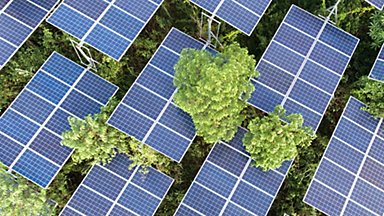


Report: driving change to decarbonise the UK food system
Combining primary research with the views of industry voices and government stakeholders, this report explores the challenges and potential solutions to decarbonising the UK’s food system.

Decarbonising our portfolio
Since the launch of our package with plant-based polymers, we have steadily increased the use of plant-based plastics over fossil-based plastics, which contributes to an even lower carbon footprint of our packaging2. Continuing this development, we sold 17.6 billion packages and 10.8 billion caps made with plant-based plastic in 2021, resulting in 96 kilotonnes of CO2 saved compared to the CO2that would have been emitted using fossil-based plastic3. Our ambition is to develop the world’s most sustainable food package – a carton made solely of responsibly sourced renewable or recycled materials that are fully renewable and fully recyclable4.

1 2025, source: Stockholm Resilience, https://www.stockholmresilience.org/research/planetary-boundaries.html.
2 When Risks Become Reality, Extreme Weather Events in 2024, 2024. Source: World Weather Attribution, https://www.worldweatherattribution.org/when-risks-become-reality-extreme-weather-in-2024/.
3 CDP is a global disclosure system win which companies report how they measure and manage their impacts and opportunities for the areas of climate, forests and water. Each area is scored by CDP based on completeness of disclosure and performance. Source: CDP, https://www.cdp.net/en.
4 Compared to 2019 for best practice lines.
5 Production scenario: 20 hours of run time/day; 340 production days/year; hot milk skimming at 55 000 l/h with including feed and booster pumps.