
Unlock the potential of your existing liquid dairy lines
Are rising energy and water costs, emissions targets and product loss putting pressure on your margins? Dairy producers face these challenges while many lines are still far from end‑of‑life. By optimising existing liquid dairy processing lines with today’s proven, in-market solutions can unlock efficiency gains, cut greenhouse gas emissions and resource use, and strengthen current assets, across four major liquid dairy line types1.


Download the reviewed assessment
See exactly how the assessment was carried out. The methodology report details the baseline vs solution scenarios, the suite of commercially available solutions, the avoided emissions calculation, data quality checks and sensitivity analysis across the four liquid dairy line types.

Summary: Methodology and results
Get a concise overview of the assessment. This summary explains the scope, key assumptions and core results for improving existing liquid dairy processing and filling lines with commercially available solutions, including emissions, water and production loss reductions.

Turning findings into business value for your dairy lines
Upgrading existing liquid dairy processing lines with the assessed suite of market‑available solutions turns the assessment findings into a practical business lever. It can allow you to reduce emissions, water use and product loss while improving the performance and utilisation of current assets, rather than investing in full line replacement. This can help strengthen margins and resilience by lowering energy and water spend, reducing waste and making better use of existing capex.


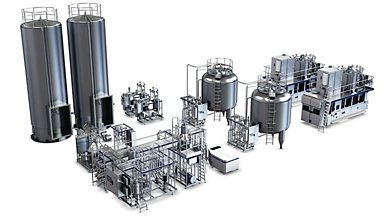

Watch how OneStep drives your efficiency
OneStep technology makes the production process faster and more energy-efficient. In a single unbroken step, raw milk is pre-heated, separated, standardized and homogenized, before undergoing UHT treatment and regenerative cooling, and then transferred to the aseptic tank. By removing the pasteurization and intermediate storage steps, the processing time is shortened from as much as two days to just a few hours.
Watch how OneStep drives your efficiency
OneStep technology makes the production process faster and more energy-efficient. In a single unbroken step, raw milk is pre-heated, separated, standardized and homogenized, before undergoing UHT treatment and regenerative cooling, and then transferred to the aseptic tank. By removing the pasteurization and intermediate storage steps, the processing time is shortened from as much as two days to just a few hours.


1 : Results are based on modelled scenarios for Tetra Pak’s 2019 best-practice lines and will vary by geography, processing line type and specific site implementation. The assessment covering greenhouse gas emissions was reviewed by the Carbon Trust using best-practice avoided emissions guidance and includes solution emissions in the calculation of net impact.