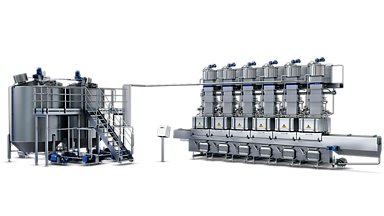
Aumente el rendimiento y la eficiencia en la producción de queso fresco con tecnología sin moldes
El aumento de la demanda genera una presión constante sobre la producción para ofrecer una calidad uniforme, maximizar el rendimiento y cumplir los más altos estándares de higiene, todo mientras mantiene las operaciones eficientes y rentables.
En el sistema totalmente cerrado y sin moldes de la formadora de queso Tetra Pak® 2.0 se integran el drenaje del suero de leche y las etapas de moldeado y conformado del queso. Mediante su tecnología patentada a base de vacío, se preserva la inocuidad alimentaria, con mayor capacidad de producción, mejor consistencia y menos interrupciones. Con una precisión de porción de hasta ±1 %, se logra un mayor control del rendimiento, menor desperdicio y se reducen las pérdidas.
La limpieza se simplifica y el uso de recursos se reduce gracias a un diseño orientado a facilitar la operación, lo que contribuye a menores costos de ejecución y a una producción continua. Con preparación integrada para la automatización, integración digital y optimización futura impulsada por la IA, está equipada para escalar de manera eficiente y mantenerse a la vanguardia en un mercado competitivo.
Capacidad
Hasta 2600 kilogramos por hora
Aplicaciones
Quesos frescos, tales como queso fresco, panela, minas frescal, tvarog, ricota, etc.

Características
Sistema de vacío
Permite producir varios tipos de queso
Concepto sin molde
Reduce la variación de peso, mejora la higiene
Sistema automático de dosificación
Peso predecible y equivalente
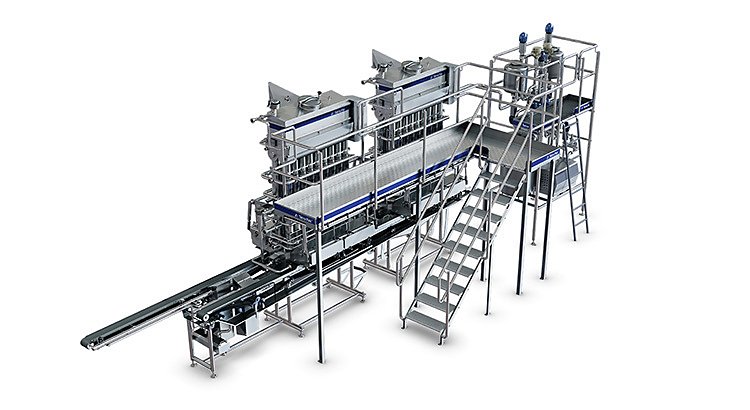
Recolección de suero
Aproveche al máximo la leche

Tolva y barrena
Distribución pareja de la cuajada
A medida que la cuajada y el suero caen en la tolva, las dos barrenas giran para introducirla en la unidad. La velocidad y la dirección de las tornillos barrenas están programadas para garantizar que la cuajada se distribuya entre todas las columnas de manera uniforme. Si cada columna cuenta con la misma cantidad de producto, se obtiene una calidad de producto estable y controlada.