
Ventajas
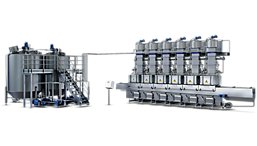
El nuevo módulo de Tetra Pak® sistema Casomatic SC7 permite producir queso y suero de mayor calidad y de forma más eficiente que nunca. El Tetra Pak sistema Casomatic SC7 brinda un sistema continuo y completamente automático de drenaje de suero, preprensado y formación de bloques de queso y llenado de molde precisos en una secuencia.
El Tetra Pak sistema Casomatic SC7 S es adecuado para la producción de quesos duros y semiduros, pero al agregar una pantalla para quitar el suero, también se pueden producir tipos de quesos granulados.
La gran capacidad por columna se logra al aplicar un sistema de drenaje de suero flexible. A la hora de producir un solo tamaño de queso, debe elegir el sistema Casomatic SC7 Tetra Pak.
Tetra Pak sistema Casomatic SC7 ofrece las siguientes ventajas:
- solución eficiente;
- ciclos de producción prolongados;
- rendimiento confiable;
- calidad de suero excelente;
- contenido preciso de humedad;
- precisión de peso excepcional;
- buena calidad de queso;
- desempeño medioambiental mejorado

Producción eficiente y efectiva de queso en volumen de medio a alto
- Producción de queso y suero de alta calidad gracias al tratamiento suave del queso y a la función de autolimpieza
- Rendimiento máximo, con un proceso estrictamente controlado que elimina las variaciones de peso y de humedad.
- La maquinaria certificada con funcionamiento higiénico mejora la inocuidad alimentaria y permite ciclos de limpieza más cortos
Características

Sistema de enfriamiento de hendidura
Reduce las variaciones en el contenido de humedad
Diseño del depósito de almacenamiento
Garantiza una proporción consistente de cuajada/suero
Sistema de drenaje
Controla el volumen de suero que se drena
Sistema de circulación de suero
Mantiene la máquina limpia durante la producción
El sistema de circulación de suero mantiene las partículas finas de la cuajada en la sección de drenaje en movimiento y evita la sedimentación. Los separadores de flujo minimizan la acumulación de cuajada en las bridas de los accesorios; esto limita la posibilidad de que se desarrollen microorganismos durante la producción y permite un ciclo de CIP (limpieza en el sitio) más corto.
Fabricación de bloques de cuajada
Proporciona bloques de queso con una apariencia de alta calidad

Sistema de automatización
Controla la producción y compensa en caso de interrupciones
Banda transportadora
Manipulación suave y cuidadosa
Diseño de la cámara de dosificación
Para una producción más higiénica
La cámara de dosificación cerrada está diseñada para permitir que el suero fluya de arriba hacia abajo, evitando que se acumule la cuajada. Este flujo continuo de suero se combina con una descarga regular que minimiza el desarrollo de bacterias y permite ciclos de producción más largos.


