
Ventajas
Eficacia poderosa
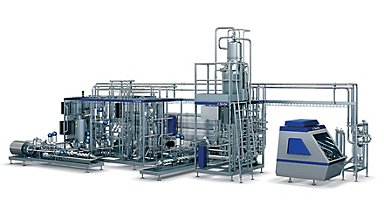
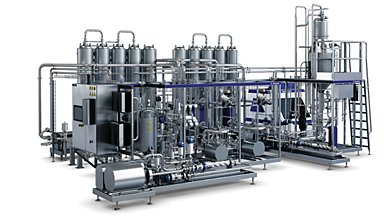
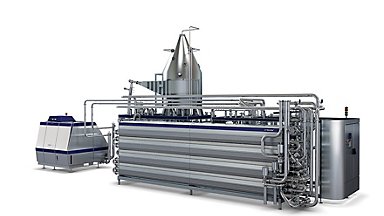
La Unidad de tratamiento indirecto UHT DE Tetra Pak® es una unidad de procesamiento que se utiliza para el tratamiento a altas temperaturas constante y altamente eficaz de productos lácteos. La unidad tiene un diseño aséptico y utiliza un intercambiador de calor tubular o de placas para el calentamiento indirecto con el fin de obtener un producto que se puede almacenar a temperatura ambiente.
Información rápida
Tratamiento continuo a altas temperaturas para productos alimentarios líquidos en condiciones asépticas
Capacidad
1000 l/h - 40 000 l/h
Aplicaciones
Tetra Pak Unidad de Tratamiento a Temperaturas Ultra-Altas (UHT) Indirecto es ideal para usar con productos lácteos, como leche, leche saborizada, crema, yogures bebibles, leche de búfalo y productos lácteos formulados, así como con otros productos de baja acidez, como leche de soja. También es posible combinarlo con aplicaciones de productos no lácteos, como jugo, té y café.

Una eficacia alta, con bajos costos operativos
- Mejor alcance de suministro y bajo costo total de propiedad gracias a la eficiencia y la reducción del consumo de servicios públicos durante todo el ciclo de producción
- Bajo consumo de energía durante la esterilización previa, habilitado por un circuito cerrado de esterilización previa
- Modo de hibernación: reduce el consumo de energía y vapor en un 60 % durante la circulación del agua.
- Soluciones de control de suciedad y limpieza inteligente que aumentan el tiempo de producción, lo que genera ahorros en el costo operativo
- Operaciones integradas habilitadas con automatización, lo que proporciona una visión general completa de la producción

Características
Regeneración de producto a producto
Necesidades de vapor y de medio de enfriamiento reducidas
La regeneración directa de producto a producto permite un bajo consumo de vapor (solo 20 kg/1000 kg de producto) y posibilita la recuperación de calor en un 92 %. Se ahorra energía adicional aL lograr una temperatura de salida de ~15 °C por sobre la temperatura de entrada. Esto implica una reducción drástica en el medio de enfriamiento que se necesita.
Control de suciedad
Tiempos de ejecución más prolongados para ahorrar dinero
La suciedad se minimiza para que el equipo pueda funcionar durante hasta 40 horas con buena calidad de leche fresca, lo que implica un menor costo por litro producido. Esto se logra optimizando la configuración con un tubo de retención con temperatura controlada que desnaturaliza las proteínas y controla con precisión el descenso de ΔT y presión y el flujo en los circuitos de agua caliente.
Depósito de equilibrio de llenado inferior
Menos pérdidas de producto
El depósito de equilibrio tiene un diseño de llenado inferior especial y un borde afilado entre las fases de mezcla. Permite ahorrar hasta 75 litros de leche* en cada cambio de producto (a 15 000 l/h), en comparación con el llenado tradicional de un depósito de equilibrio de fondo llano. La disposición de la válvula de entrada acorta la fase de mezcla y una bomba controlada por frecuencia reduce aún más el consumo de energía.
*El cálculo se basa en la comparación del depósito de equilibrio de baja pérdida y la solución de compensación por lote Tetra Therm Aseptic Flex. Escenario de producción: Capacidad de 15 000 l/h, 3 cambios de producto/día, 300 días de producción/año
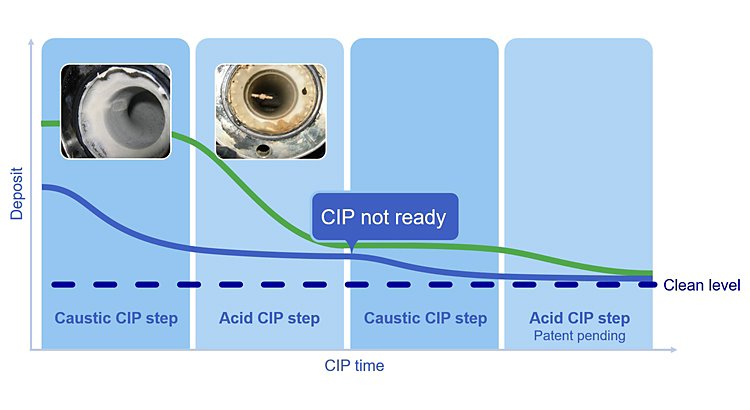
IntelliCIP™ 2.0
Limpieza adaptada a las necesidades
Gracias a IntelliCIP™ 2.0, una nueva tecnología (con patente en trámite WO2013092414), los resultados de limpieza se pueden monitorear en continuo con la ayuda de los sensores de CIP (limpieza en el sitio). Esto implica que las configuraciones de limpieza se pueden optimizar según el grado de suciedad, lo que da como resultado más tiempo de funcionamiento y una reducción en el consumo de servicios públicos.
Regulador automático de humedad
Para obtener tiempos de ejecución más prolongados
Los reguladores de humedad del homogeneizador absorben la variación de presión y de impacto antes y después de la homogeneización. El llenado automático de aire mantiene el colchón de aire en el regulador de humedad del homogeneizador para asegurar un funcionamiento sin problemas. Sin el colchón de aire, ocurrirían vibraciones y cavitaciones que acortarían el tiempo de ejecución. Se incluye CIP (limpieza en el sitio) completamente automatizada, lo que aumenta la seguridad de los operarios, la higiene y la optimización del ciclo de producción.

Hibernación
Gaste menos en prepararse
Si se produce una brecha de tiempo entre la esterilización previa y la producción, la unidad puede configurarse para que ingrese en modo de hibernación de forma automática. Esta función opcional reduce la cantidad de energía y agua para refrigeración durante la circulación de agua esterilizada en hasta un 60 % en comparación con la circulación de agua tradicional, sin perder el estado aséptico de la planta.
Paneles protectores del intercambiador de calor
Gran potencial de ahorro de energía
Los paneles de protección colocados en torno al intercambiador de calor tubular Tetra Pak® encapsulan el equipo y retienen el calor. Esto permite ahorrar hasta un 6 % en el consumo de energía en comparación con los intercambiadores de calor sin paneles. Gracias al aislamiento agregado, los ahorros pueden aumentar hasta un 11 %. Los paneles también aumentan la seguridad de los operadores, ya que reducen el riesgo de contacto con superficies calientes.
Sistema de protección flotante del intercambiador de calor
Vida útil más prolongada y eficiencia excepcional
El producto aséptico en el interior de los tubos del Tetra Pak® Intercambiador de calor tubular fluye a mayor presión que el producto sin tratar en el lado del casco. Un sistema de protección flotante permite una expansión térmica, lo que reduce enormemente el riesgo de daño por grietas y, por lo tanto, de pérdida de esterilidad. Además de prolongar su vida útil, mejora la inocuidad alimentaria.




Redefinición de los recursos
Los productores de alimentos y bebidas enfrentan cada vez más desafíos en la gestión de energía, agua y desechos. Abordar estos desafíos requiere una combinación de tecnología y experiencia en alimentos adaptada a sus operaciones. Nuestra amplia cartera de productos y servicios, respaldada por décadas de experiencia en aplicaciones de alimentos, puede ayudarlo a reducir la energía y el agua que consume y los desechos que produce, ofreciéndole, a la vez, beneficios en los costos.
