
Wake up and smell the RTD coffee!
As you may have noticed, alongside the freshly brewed coffee drinks we know so well, a whole range of conveniently packaged, grab-and-go options has recently emerged. Served cold, these dairy-, water- or plant-based coffees provide the perfect morning kick-start or afternoon energy-boost. If you’re new to the RTD coffee category, we can help you enter the market. If you’re already onboard, let’s innovate together and expand your presence.


Untapped potential
The coffee-based drinks category is expanding, with consumption expected to rise from 7.8 billion litres to 8.1 billion litres by 2029, where 90% of the growth is represented by ready-to-drink products.1 As consumers seek convenient, premium, on-the-go coffee experiences, there are significant opportunities for innovative brands to capture growth and attract new consumers.


webinar
Is ready-to-drink coffee your next opportunity?
Enter or expand in ready-to-drink coffee with confidence. In this webinar, our category, processing and packaging experts share practical insights to help you capture a share of this growing market. Coffee-based drinks are expected to add 300m litres to global consumption by 2029, with ready-to-drink formats forecast to drive 90% of that growth1. Discover what consumers want, how your bean, roast and brewing choices shape flavour and how packaging protects aroma and makes drinking on the go easy.

customer case
Premium coffee taste. Premium business growth.
Capturing the premium experience of a barista café is about more than great ingredients. Learn how we supported First Press as they optimised product formulations for commercial production of shelf-stable, specialty coffee drinks. Today, they are responding to consumer demands for innovative dairy, protein and plant-based products while simultaneously expanding into new retail and export markets.

customer case
The first protein-coffee on the Canadian market
Learn how Tetra Pak supported the founders of Canadian start-up, brüst, to create a new category in the Canadian marketplace. Having initially packaged their products in glass bottles, the company soon switched to Tetra Pak cartons to leverage the sustainability and shelf-life advantages of aseptic packaging.

Case story
Malaysian dairy expands into functional, ready-to-drink Café Latte
On the back of its move into ambient milk production, Malaysian dairy Farm Fresh has created a new kind of functional ready-to-drink coffee beverage. Learn how an increase in product shelf-life paved the way for innovation, making it practical to manufacture niche products in smaller volumes.


How packaging attributes influence RTD coffee purchase decisions
Consumers increasingly consider packaging attributes when choosing ready-to-drink coffee products. In our recent survey2, 47% of respondents said they are more likely to consider a brand when packaged in a solution they perceive as “sustainable".3Discover what consumers say matters most, and how these perceptions may influence your business.


Advanced food production system for ready-to-drink coffee products
Save time and effort by choosing a single supplier with capabilities that stretch from product development through processing, packaging, launch and beyond. With data-driven insights and tailored services, we can help your business remain profitable, resource-efficient and resilient for years to come.


1 and 2: Extraction and filtering
1. Extractor – open or closed
Our extractor technology, whether open or closed, secures the product characteristics you’re looking for, and you can set the extraction parameters based on your raw material and your product specifications. This part of the line can be designed for infusion processes, which are ideal for RTD coffee products.
What happens at this stage?
Extraction vessel is filled with hot water and raw material is added. An agitator ensures proper raw material wetting and extraction while a heating jacket maintains the optimal temperature. After extraction, the extract is discharged, cooled and transferred. A water rinse minimises extract losses and prepares the extractor for the next batch.
2. Tetra Pak® Bag Filter
Designed to optimise product quality and consistency, the filtration system prepares the coffee extract for downstream processing. Solutions are available for a wide range of capacities and production requirements.
What happens at this stage?
Ground coffee particles carried over from extraction are removed through filtration, which helps protect downstream equipment while supporting consistent product quality.

3: Heat treatment
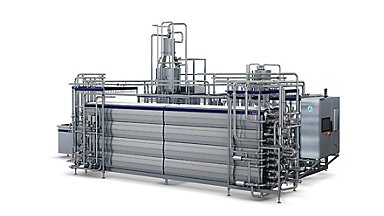
Tetra Pak® Plate Heat Exchanger
Our plate heat exchangers are designed to gently and efficiently cool the coffee extract while helping to preserve product quality. They are easy to service and maintain, supporting high uptime and a low total cost of ownership.
What happens at this stage?
The coffee extract passes through the heat exchanger, where heat is efficiently transferred through corrugated metal plates. This rapidly cools the extract before the clarification process, creating the conditions required for coffee cream formation while helping to preserve flavour, colour and product quality.

4 and 6: Storage and buffering
4. Storage tank
The cooling and buffer tank prepares the coffee extract for the clarification stage by providing controlled temperature and residence time. For coffee products made from ground coffee, this step can promote coffee cream formation, helping to achieve the clarity, consistency and stability required in the final RTD beverage.
What happens at this stage?
The coffee extract is cooled during transfer to the tank and held under controlled conditions. For ground coffee products, this promotes coffee cream formation, allowing it to be removed in the downstream clarifier. The tank also provides process buffering, which supports a consistent flow and reliable operation between extraction and clarification.
6. Buffer tanks
Our buffer tanks help ensure smooth and reliable production by providing temporary storage between process steps and maintaining a consistent product flow.
What happens at this stage?
The coffee extract is temporarily stored before transfer to the next process step, providing operational flexibility and maintaining a consistent product flow.

5: Clarifying
Tetra Pak® Clarifiers
Our hermetically sealed clarifiers offer excellent product quality, while the AirTight technology within enables superior clarification efficiency, ideal for removing impurities from your RTD coffee products. They are also designed to ensure energy efficiency, which helps reduce operational costs.
What happens at this stage?
The coffee enters the clarifier, where centrifugal forces remove fine suspended solids and coffee cream. The hermetically sealed design minimises air uptake, helping preserve product quality and deliver a clear, stable coffee extract.

7 and 8: Preparation and blending
7. Tetra Pak® Preparation System B-EXT
This highly versatile mixing and preparation system enables the final formulation of RTD coffee products. It is designed to deliver consistent product quality while reducing product losses, water consumption and energy usage throughout the preparation process.
What happens at this stage?
The coffee extract is blended with liquid and/or powder ingredients to create the coffee base or final beverage recipe. The system's injector and radial jet mixer technology enable rapid ingredient incorporation and efficient hydration, helping to prevent clogging, and ensure a homogeneous product before downstream processing.
8. Tetra Pak® Inline Blender B
The Tetra Pak Inline Blender B continuously blends the prepared coffee base with water to achieve the target product composition. The system ensures consistent product quality while supporting efficient, high-capacity production.
What happens at this stage?
The coffee base is combined with water at a controlled ratio to achieve the required product specification. Accurate flow measurement and in-line blending ensure a homogeneous product with consistent taste, colour and composition before further processing or filling.

9: Pasteurization and UHT treatment
Pasteurizer and indirect UHT
The Tetra Pak® Pasteurizer B & Tetra Pak® Indirect UHT B is a premium solution with class-leading flexibility. The energy efficiency of the system helps reduce the total cost of ownership, while the modular design means it’s easy to upgrade.
What happens at this stage?
The product is heat treated under carefully controlled time and temperature conditions to achieve the required level of food safety and shelf-life performance. Energy-efficient heat regeneration minimises utility consumption while maintaining product quality. Time and temperature requirements vary depending on the product. A plate heat exchanger or tubular heat exchanger (depending on the product) with product-to-product heat regeneration can then heat the RTD coffee to the desired temperature in an economical way.

10 and 11: Buffering and CIP
10. Tetra Pak® Aseptic Tank
Our buffering tanks minimise product loss while keeping the coffee safe and protected before it moves on to the packaging phase of production. The tanks come in a range of sizes and configurations so that you can choose the option that fits your product best.
What happens at this stage?
The tank is sterilised by steam at a minimum temperature of 125°C. It is then cooled by water circulating through a cooling jacket. During cooling, sterile air is fed into the tank to maintain overpressure. During production, sterile air fills the tank space above the product level. The coffee is stored at the desired temperature and can be agitated if necessary.
11. CIP unit
Our simple, modular clean-in-place technology offers a cost- and resource-efficient way to clean the food processing equipment. Its in-built flexibility means you can adapt the cleaning program to your specific needs.
What happens at this stage?
The unit consists of 1-4 pressure lines, all individually pre-assembled, frame mounted and tested. Each pressure line includes a pressure pump, circulation tank, tubular heat exchanger, process valves, sensors and all the necessary internal piping and wiring. CIP is performed by using the pressure pump to circulate detergent and water in a specific sequence, from the circulation tank of the pressure line over a cleaning circuit.

12 and 13: Filling and accumulation
12. Tetra Pak® A3/CompactFlex
The Tetra Pak® A3/CompactFlex aseptic filling machine is compact and ideal for producers who need flexibility in limited floor space. It runs at speeds of up to 9,000 packages per hour and offers easy conversion between over 20 different portion packages.
What happens at this stage?
The package is sterilised, the product is injected with a high level of accuracy to avoid waste, and then the chosen aseptic package is sealed and ready for the next step.
13. Tetra Pak® Accumulator Helix 30
This accumulator is designed to optimise space efficiency, as packages are accumulated vertically, while the smart and gentle queuing of the packages minimises damage. Accurate production tracking is also made easier as packages leave the accumulator in the same order they entered.
What happens at this stage?
The filled packages are gathered and queued with even spacing, ensuring the next phase of production moves forward smoothly.

14 and 15: Straw application and shrink wrapping
14. Tetra Pak® Straw Applicator 30
If your RTD coffee product is going to have a straw attached for convenient consumption, this technology is the ideal solution. It can attach any straw to Tetra Brik® Aseptic and Tetra Prisma® Aseptic carton packages, and the glue is applied to straw film for greater accuracy and reduced glue consumption.
What happens at this stage?
Straws are attached to the packages in a smooth, safe way that does not damage or negatively affect the package.
15. Tetra Pak® Tray Shrink 30
This technology offers rapid, resource-efficient shrink wrapping of your trays. With the possibility of 40 different tray sizes, this solution offers flexibility combined with low material, electricity and air consumption.
What happens at this stage?
Now it’s time for the final stage of the process, where the trays of your products are wrapped and ready for shipping. Our solution uses a plastic film that is only 40 micrometres thick, which minimises material use and, in turn, improves cost-efficiency.
Advanced production systems for RTD coffee
Get everything you need for your RTD coffee production, from product creation and recipe testing to processing, filling, packaging, logistics, services and beyond.

Upgrade existing equipment
Take advantage of our equipment upgrades to gain flexibility and make innovative RTD coffee products on an existing dairy milk or plant-based beverage production line. Diversify your portfolio and utilise excess production capacity with a tailored upgrade solution based on your needs.

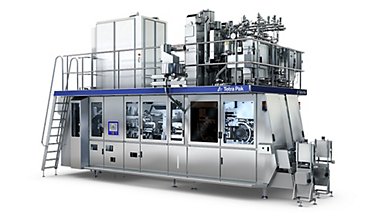
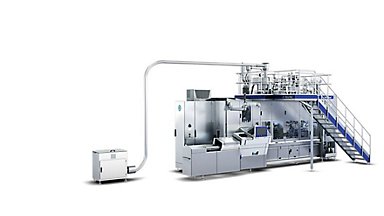
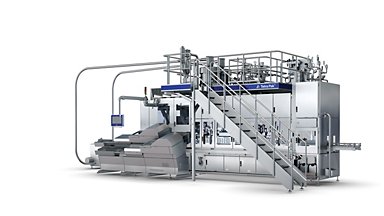
Filling machines for RTD coffee drinks
Explore our wide range of filling machines designed to improve food safety and quality.



Processing equipment for RTD coffee drinks




1. Source: Tetra Pak Compass, 2025. Figure includes still, concentrate and all forms of distribution - ambient, chilled and unprocessed.
2. Source: Sustainable Packaging Consumer Research, 2025, comprising a total of 12,500+ consumer interviews based on an online questionnaire in 25 countries.
3. One that is defined as “recyclable” and “made of recycled materials” among its attributes.