Información rápida
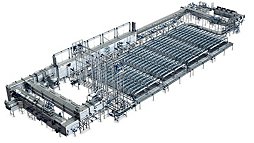
El sistema de manipulación de moldes Tetra Pak® es una solución avanzada que se utiliza para el prensado y conformado de quesos semiduros y duros en prensas cerradas con un sistema completo de manipulación de moldes y tapas.
Principio de funcionamiento
Los bloques de cuajada, que salen del equipo de conformado mediante el escurrido, se recolectan en un molde. Después de que el colocador de tapas cubre el molde con una tapa, los moldes se transportan a la sección de prensado final en configuración cerrada donde se presiona el bloque de cuajada para dar forma al queso y formar una corteza uniforme alrededor del queso mediante una fuerza de prensado que aumenta gradualmente. En la etapa final de la sección de prensado, los quesos se desmoldan en la línea de desmolde y se transportan a un sistema de salmuera. Los moldes y las tapas se dan vuelta antes de limpiarlos con la máquina de enjuague y están listos para volver a utilizarse.
El sistema de manipulación de moldes Tetra Pak es controlado por un PLC. Las prensas finales cerradas se limpian en su lugar.
Aspectos destacados
- Diseño higiénico
- Proceso de producción totalmente automatizado y controlado
- Flexibilidad para prensar quesos de diferentes formatos y tamaños en el mismo equipo
Capacidad:
Hasta 100 t/día
Aplicaciones:
Queso semiduro

Velocidad y flexibilidad
- Flexibilidad para prensar quesos de diferentes formatos y tamaños en el mismo equipo
- Entorno de producción higiénico: producto de alta calidad constante
- Máximo tiempo de actividad, gracias a ciclos de limpieza más cortos

Características

Varios formatos de molde
Permite un cambio fácil
Si desea producir quesos de diferentes formatos, ofrecemos sistemas de manejo de moldes flexibles. El manejo de moldes, incluidos los moldes Laude, está diseñado de tal manera que se pueden usar diferentes tipos de moldes en un sistema de manejo de moldes. Los tipos de moldes de queso que no están en producción se pueden guardar en la unidad de almacenamiento.

Prensado individual
Control total sobre el proceso de prensado
En este sistema, las placas de prensado se activan mediante cilindros neumáticos individuales. Esto significa que cada queso recibe la misma fuerza de prensado, lo que genera una calidad de producto final uniforme.
Prensas cerradas
Menor tiempo de limpieza
Las prensas están cerradas, lo que ayuda a mantener un entorno de producción estable con respecto a la temperatura, la humedad y la higiene. Para realizar la limpieza, se quitan todos los moldes de la línea y se almacenan por separado. Las prensas cerradas permiten emplear una limpieza en el sitio eficiente, lo que maximiza el tiempo de actividad.
Túnel de limpieza de dos niveles
Asegura la limpieza de moldes y tapas
Los moldes y las tapas se transportan a la unidad de limpieza después de cada uso. El proceso de limpieza comienza con el enjuague previo, que usa agua del enjuague final anterior. Luego se realiza la limpieza principal, manteniendo una temperatura y concentración estables de los productos de limpieza. El último paso es el enjuague final con agua dulce, para asegurar la eliminación de todo el detergente. Luego, esta agua se devuelve al inicio del ciclo para usarla en el siguiente enjuague previo, lo que disminuye el consumo de agua. El túnel mismo se limpia después de cada ciclo de producción. La capacidad del túnel de limpieza se adapta a la capacidad de la línea.

Unidad de almacenamiento de moldes
Almacenamiento práctico y seguro de conjuntos
Cuando es necesario limpiar el equipo o cuando se usan distintos formatos de molde, los moldes se quitan y se almacenan en esta unidad. Construida en varios niveles, esta unidad de almacenamiento usa el espacio de su planta de manera eficaz. Y con un estante por nivel, los moldes se mantienen seguros.