
Avantages
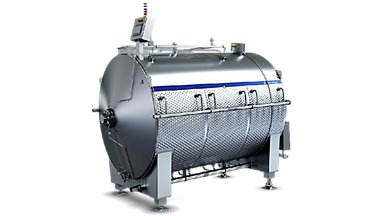
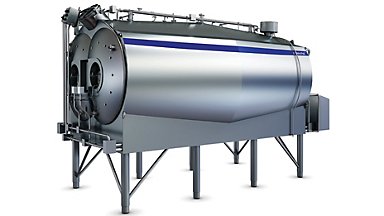
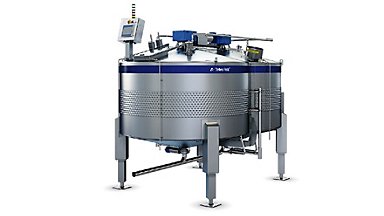
La cuve à fromage à grains Tetra Pak® E4 est une solution fermée entièrement automatisée pour la préparation du caillé dans les fromages blancs et autres fromages à grains. Elle a été étudiée avec le plus grand soin pour garantir une qualité de produit constante avec un minimum de déchets. En plus de garantir une hygiène optimale, la conception fermée permet de renforcer la productivité en améliorant les performances et en réduisant les besoins en main-d’œuvre. Les nombreuses innovations de la cuve garantissent la vitesse de chauffe, la finesse du fromage et l’homogénéité de la granulométrie du caillé.

Découvrez les avantages d’un processus fermé et contrôlé
- Caillé homogène avec un minimum d’intervention de l’opérateur, grâce à un processus de coupe unique entièrement automatisé qui n’est pas possible dans les cuves ouvertes.
- Une qualité de produit plus uniforme que les solutions ouvertes grâce à un chauffage uniforme sur toute la longueur de la cuve.
- Sécurité accrue des produits et longue durée de conservation grâce à une meilleure hygiène de production et à des conditions de traitement optimisées et stables.

Caractéristiques

Enveloppe chauffante
Une température de caillé uniforme et aucun risque de surchauffe
L'enveloppe chauffante est placée sur la partie inférieure de la cuve et sur ses parois latérales, afin d'assurer un transfert thermique uniforme, rapide et contrôlé. Le contrôle du transfert thermique du caillé permet également de réguler la vitesse de la synérèse. Cela permet de déterminer avec exactitude le taux d'humidité du produit final.

Modèle d'entrée extrudée
Renforce la sécurité alimentaire et prolonge la durée de vie des équipements

Système de bascule
Réduit les pertes de produit
Au terme du processus de vidage, un capteur de pression situé dans la partie inférieure de la cuve envoie un signal indiquant qu'il est temps d'incliner la cuve afin d'en extraire le caillé. Cela permet de s'assurer que tout le produit est extrait de la cuve et de réduire ainsi les gaspillages.

Paroi arrière dentelée
Tout le caillé est découpé
La paroi arrière de la cuve est dotée de dentelures placées à des intervalles réguliers. Ainsi, lors d'une découpe longitudinale du caillé, la harpe peut continuer de découper jusqu'au bord extrême de la masse de caillé coagulé. Ainsi, tout le caillé est découpé, ce qui réduit les gaspillages.

Conception des lames






Le monde du cottage cheese évolue : suivez-vous le rythme ?
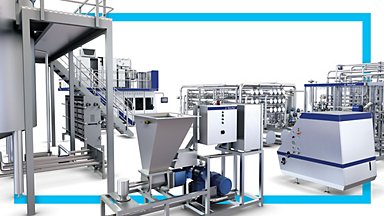
L’essor du cottage cheese a suscité une nouvelle demande et de nouveaux types de consommateurs. Afin de maximiser leur production tout en offrant un produit de qualité, de nombreux fabricants ont recours à de nouvelles technologies. Dans cet article, Lisa Stanger, experte chez Tetra Pak, examine les défis – et les solutions – qui changent l’avenir du cottage cheese.


