
Benefícios
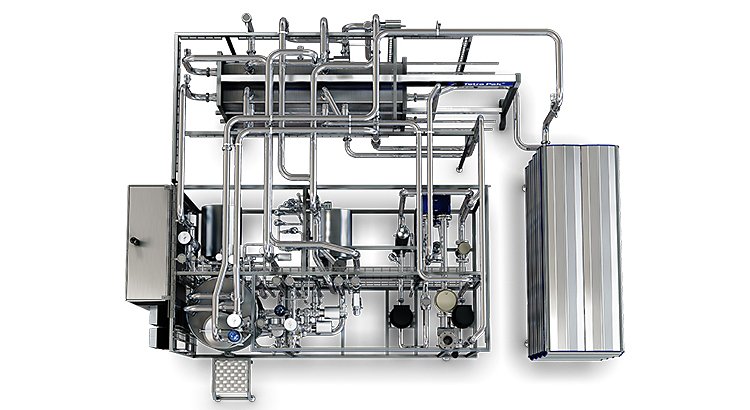
O Tetra Pak® Pasteurizador D é um pasteurizador usado para vários produtos, como leite cru, leite para queijo, leite para iogurte, creme, mistura para sorvete e outros produtos lácteos líquidos de baixa acidez. Com foco principal na segurança do produto, economia de produto, baixo custo operacional de processamento e economia ambiental, você terá uma operação de longa duração e preparada para o futuro.
Resumo
Unidade para uma pasteurização eficiente e segura de produtos lácteos
Capacidade
2.000 a 60.000 l/h
Aplicações
Leite para consumo, leite para iogurte, leite para queijo, sorvete, pó e pré-tratamento do leite UHT

No coração do processo de produção de lácteos
- Baixo consumo de energia graças ao rápido sistema de hibernação de resposta rápida e ao design de unidade compacta
- Suporte de vários recursos para a segurança alimentar antes e durante a produção
- Um sistema de automação controla a operação dessa unidade e dos submódulos conectados, permitindo uma produção eficiente

Características
Sistema de desvio
Garante a pasteurização correta
A temperatura do produto é verificada antes e depois do tubo de retardo. O produto continuará saindo do pasteurizador somente se tiver sido tratado com a temperatura correta e mantido pelo período correto tubo de retardo. Se este não for o caso, um sinal será enviado automaticamente para a válvula de desvio, e o produto será renviado para o tanque de equilíbrio para recirculação.
Diferencial de pressão
Garante a segurança de alimentos
A bomba de recalque cria uma pressão diferencial entre o lado pasteurizado e o não pasteurizado da unidade. Para aumentar ainda mais a segurança, esse diferencial pode ser monitorado pelos transmissores de pressão. Se esses transmissores "perceberem" que o diferencial não foi mantido, o produto será desviado de forma automática de volta para o tanque de equilíbrio para recirculação.
Automatic hibernation
Minimises energy consumption
During water circulation, the flow in the pasteurizer can be decreased, the cooling can be stopped and most connected sub-modules can be switched off. This so-called 'hibernation' minimizes the amount of steam, energy and water consumed while waiting for product to enter the system. The ramp up and ramp down time is only about 2 minutes, which makes it worthwhile using hibernation even during short periods of water circulation.
Produção por meta
Poupa tempo e reduz o risco de erro humano
Esse recurso permite a produção de uma determinada quantidade de leite e creme - definida como um determinado número de litros ou programada para continuar até que o tanque de destino esteja completo (ou que o tanque de origem esteja vazio). Se conectado a um separador e a uma unidade de padronização, também é possível definir um teor de gordura específico. Operações como a CIP, circulação de água e mudança para uma nova receita podem ser definidas antecipadamente e realizadas automaticamente em sequência sem a necessidade de intervenção humana.
Teste de vazamento integrado
Aumenta a segurança de alimentos
Antes ou após a operação produtiva, o teste integrado de vazamento permite que você pressurize o sistema para verificar se não há queda de pressão, o que implicaria em vazamento no trocador de calor a placas ou depois dele. Isso é importante, pois um vazamento poderia levar a uma contaminação do lado pasteurizado para o lado não pasteurizado durante a produção.
Low-loss balance tank
Minimizes product loss
A smart balance tank configuration makes it possible to remove the maximum amount of water before product enters the tank, thus reducing the mix of water and product. This method lowers the number of litres in the mix phase by over 50%, leading to a significant reduction in product losses.

Controle de pressão contínuo
Aumenta a segurança de alimentos
Durante a produção, há, normalmente uma pressão diferencial entre o lado pasteurizado e o não pasteurizado para diminuir o risco de vazamentos e manter o produto seguro de contaminação. No entanto, durante a descarga (da separadora), essa pressão diferencial normalmente desaparece. No Tetra Term Lacta, um sistema de controle de pressão contorna esse problema. Ele compensa a queda de pressão e evita o risco de vazamentos e contaminação.
Manual de Processamento de Laticínios – Online
O Manual de Processamento de Laticínios reúne nosso amplo conhecimento sobre processos de fabricação, oferecendo informações detalhadas e de fácil compreensão.
%20(1)?wid=384&hei=216&fmt=jpg&resMode=sharp2&qlt=85,0&op_usm=1.75,0.3,2,0)


