Resumo
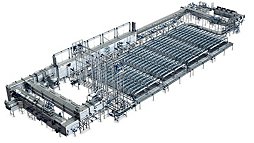
O sistema Tetra Pak® Mould Handling é uma solução avançada usada para prensagem e formação de queijos semiduros e duros em prensas fechadas, com manuseio completo de moldes e tampas.
Princípio de funcionamento
Os blocos de coalhada, ao saírem do equipamento de formação de drenagem, são coletados em um molde. Após o molde ser coberto com uma tampa pelo aplicador, os moldes são transportados para a seção de prensagem final, onde o bloco de coalhada é prensado gradualmente para formar o queijo e criar uma casca uniforme. Na etapa final de prensagem, os queijos são desenformados na linha de desenformagem e transportados para um sistema de salmoura. Os moldes e tampas são virados de cabeça para baixo antes de serem limpos na máquina de enxágue, ficando prontos para reutilização.
O sistema Tetra Pak Mould Handling é controlado por PLC. As prensas finais fechadas são limpas no local (CIP - Clean in Place).
Destaques
- Design higiênico
- Processo de produção totalmente automatizado e controlado
- Flexibilidade para prensar queijos de diferentes formas e tamanhos no mesmo equipamento
Capacidade:
Até 100 toneladas/dia
Aplicações:
Queijo semiduro

Velocidade e flexibilidade
- Flexibilidade para prensar queijos de diferentes formas e tamanhos no mesmo equipamento
- Ambiente de produto higiênico: produto consistentemente de alta qualidade
- Tempo de atividade máximo, graças a ciclos de limpeza mais curtos

Características

Vários formatos de molde
Troca fácil
Se você deseja produzir queijos de diferentes formatos, sistemas de manuseio de moldes flexíveis estão disponíveis. O manuseio do molde, incluindo os moldes Laude, são projetados de forma a lidar com diferentes tipos de moldes em um sistema de manuseio. Tipos de molde de queijo que não estão em produção podem ser armazenados na unidade de armazenamento.

Prensagem individual
Controle total sobre o processo de prensagem
Neste sistema, as placas de prensagem são ativadas por cilindros pneumáticos individuais. Isso significa que cada queijo recebe a mesma força de prensagem, resultando em uma qualidade uniforme do produto final.
Prensas fechadas
Tempo de limpeza mais curto
As prensas são fechadas, o que ajuda a manter um ambiente de produção estável em relação à temperatura, umidade e higiene. Para limpeza, todos os moldes são retirados da linha e armazenados separadamente. As prensas fechadas possibilitam a implantação da limpeza CIP eficiente, que maximiza o tempo de atividade.
Túnel de limpeza de nível duplo
Garante a limpeza de moldes e tampas
Os moldes e tampas são transportados para a unidade de limpeza após cada uso. O processo de limpeza começa com o pré-enxágue, usando a água do enxágue final anterior. A limpeza principal é então realizada, mantendo uma temperatura estável e a concentração dos agentes de limpeza. A última etapa é o enxágue final com água doce, para garantir que todo o detergente seja removido. Essa água é então conduzida de volta ao início do ciclo para ser usada no próximo pré-enxágue, reduzindo assim o consumo de água. O próprio túnel é limpo após cada ciclo de produção. A capacidade do túnel de limpeza é adaptada para corresponder à capacidade da linha.

Unidade de armazenamento de molde
Armazenamento conveniente e seguro de conjuntos
Quando o equipamento precisa ser limpo ou quando diferentes formatos de molde estão sendo usados, os moldes são removidos e armazenados nesta unidade. Construída em vários níveis, esta unidade de armazenamento faz uso eficiente do espaço em sua fábrica. E com uma prateleira por nível, os moldes são mantidos seguros.