Données clés
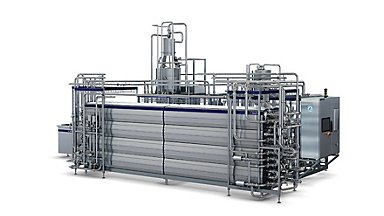
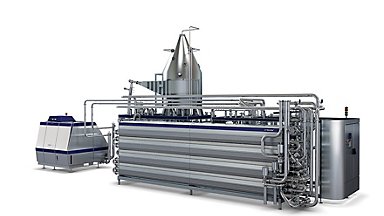
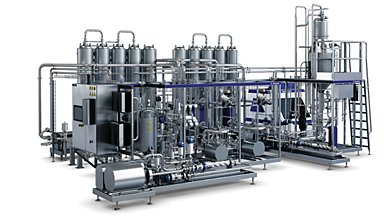
Une unité assurant un traitement hautement efficace, continu, à ultra-haute température des produits alimentaires préparés. Cette unité de conception aseptique utilise le Tetra Pak® Échangeur de chaleur tubulaire qui chauffe indirectement un produit afin de permettre une conservation à température ambiante.
Capacité
Entre 2 000 et 20 000 l/h, selon le produit. Autres capacités sur demande
Applications
Soupes, sauces, desserts, préparations aux fruits, produits à base de tomate, aliments pour bébés et autres produits à taux de viscosité faible ou élevée et avec ou sans morceaux.

Des aliments de haute qualité, grâce à un savoir incomparable

Caractéristiques

Configuration matérielle flexible
Un produit polyvalent et à l'épreuve du futur
Les composants sont soigneusement sélectionnés, testés et éprouvés et permettent de développer et de mettre à niveau votre système en toute simplicité pour répondre à vos besoins futurs en capacités et en production. Il existe également des solutions pour vos portefeuilles de produits actuels et futurs, car ce modèle vous permet de traiter les produits, qu'ils soient aseptiques ou non-aseptiques, qu'ils soient lissesou avec morceaux, avec une vaste gamme de viscosités.
Traitement thermique optimisé
Une grande qualité et une intégrité des particules constantes

Conception conforme aux normes d'hygiène
Assure la sécurité alimentaire

Contrôle PLC
Maximise le retour sur investissement
Notre système convivial de contrôle vous permet de gérer entièrement les recettes et les paramètres et de tirer le meilleur parti de votre usine de production. Vous obtiendrez un bon retour sur investissement, grâce à des risques d'erreurs humaines réduits au minimum, une qualité constante, des rendements élevés et des coûts moindres. Le système de supervision Tetra PlantMaster™ pour salles de contrôle vous permet d'améliorer la maîtrise de votre production, grâce à des tableaux pratiques qui vous donnent une vue d'ensemble, la sélection ou le routage des produits, la consignation avancée des données, les rapports automatisés, une traçabilité complète et une maintenance préventive aisée.
Clapet automatique de l'homogénéisateur
Pour des durées de fonctionnement supérieures
Les clapets de l'homogénéisateur absorbent les variations de pression et les chocs avant et après l'homogénéisateur. Le remplissage automatique d'air préserve le coussin d'air dans le clapet de l'homogénéisateur pour garantir un fonctionnement régulier. Sans ce coussin, il se produirait des vibrations et de la cavitation, ce qui réduirait la durée de fonctionnement. Le système intègre un NEP entièrement automatisé, ce qui améliore la sécurité de l'opérateur, l'hygiène et optimise encore davantage le cycle de production.