Benefícios
Eficácia potente
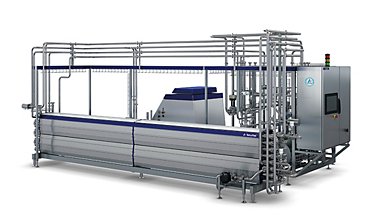
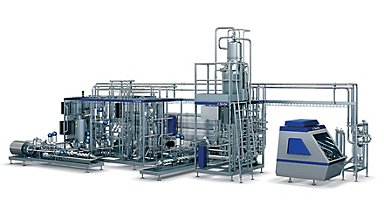
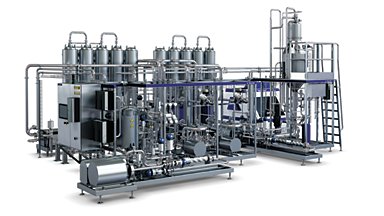
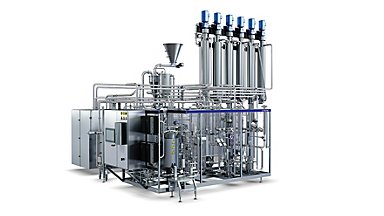
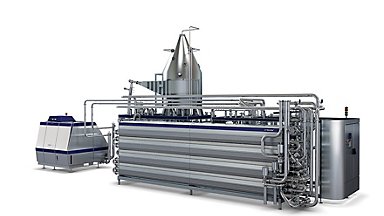
A Tetra Pak® Unidade UHT indireta é uma unidade de processamento para o tratamento de temperatura ultra-alta altamente eficiente e contínuo de produtos lácteos. A unidade tem design asséptico e é usado um trocador de calor a placas ou tubular no aquecimento indireto para a obtenção de um produto que possa ser armazenado em temperaturas ambiente.
Resumo
Tratamento térmico UHT contínuo para produtos alimentares líquidos sob condições assépticas
Capacidade
1.000 – 40.000 l/h
Aplicações
A Tetra Pak Unidade UHT indireta é adequada para produtos lácteos, como leite, leite aromatizado, nata, bebidas de iogurte, leite de búfala e produtos lácteos formulados, bem como outros produtos de baixa acidez, como soja e leite de soja. Combinações com aplicações não lácteas, como leite, chá e café, também são possíveis.

Alta eficiência, baixo custo operacional
- O melhor escopo de fornecimento e baixo custo total de propriedade possibilitado por eficiências e consumo reduzido de serviços públicos durante todo o ciclo de produção
- Baixo consumo de energia durante a pré-esterilização, possibilitado por um ciclo de pré-esterilização fechado
- Modo de hibernação – reduzindo o consumo de energia e vapor em 60% durante a circulação de água.
- As soluções inteligentes de controle de incrustação e limpeza aumentam o tempo de produção, resultando em economia de custos operacionais
- Habilitação de operações integradas com automação – fornecendo um panorama completo da produção

Características
Regeneração produto a produto
Menor necessidade de vapor e meio de resfriamento
A regeneração direta produto a produto permite baixo consumo de vapor (apenas 20 kg/1.000 kg de produto) e possibilita a recuperação de 92% do calor. Há uma economia adicional de energia ao atingir-se uma temperatura de saída aproximadamente 15 °C acima da temperatura de entrada. Isso significa uma redução drástica no meio de resfriamento necessário.
Controle de incrustação
Maior tempo de operação para reduzir custos
A incrustação é minimizada, de modo que o equipamento pode operar por até 40 horas com leite branco de boa qualidade, o que significa menor custo por litro produzido. Isso é alcançado por meio da otimização da configuração com um tubo de retenção para desnaturação de proteínas com temperatura controlada, controlando com precisão o ΔT e a queda de pressão, além do fluxo nos circuitos de água quente.
Tanque de equilíbrio de enchimento de fundo
Menos perdas de produto
O tanque de equilíbrio possui um design especial de enchimento de fundo e um limite preciso entre as fases da mistura. Ele pode economizar até 75 litros de leite* a cada troca de produtos (a 15.000 l/h) em comparação com o enchimento tradicional de um tanque de balanço de fundo plano. A disposição da válvula de entrada diminui a fase de mistura, e uma bomba com frequência controlada reduz o consumo de energia.
*O cálculo é baseado na comparação do tanque de equilíbrio de baixa perda com a solução de headerbatch Tetra Therm Aseptic Flex. Cenário de produção: Capacidade de 15.000 l/h, três trocas de produto/dia, 300 dias de produção/ano
IntelliCIP™ 2.0
Limpeza adaptada à necessidade
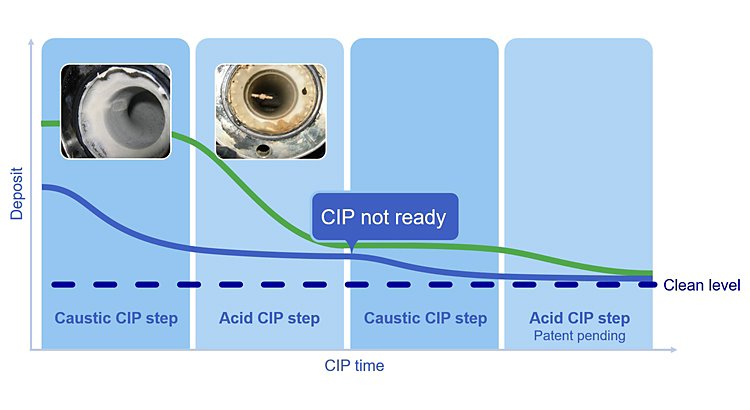
Graças à IntelliCIP™ 2.0, uma nova tecnologia (patente requerida WO2013092414), os resultados da limpeza podem ser monitorados em linha com o auxílio de sensores CIP. Isso significa que as configurações de limpeza podem ser otimizadas de acordo com o grau de incrustação, resultando em maior tempo de atividade e redução no consumo de utilidades.
Amortecedor automático
Para maior tempo de operação
Os amortecedores homogeneizadores absorvem a variação de pressão e choques antes e depois do homogeneizador. O reabastecimento de ar automático mantém o bolsão de ar no amortecedor do homogeneizador para garantir uma operação homogênea. Sem o bolsão de ar, a vibração e a cavitação ocorreriam e reduziriam o tempo de operação. Um CIP totalmente automatizado está incluso, aumentando a segurança do operador, melhorando a higiene e otimizando o ciclo de produção. Estão disponíveis a versão asséptica para Tetra Therm Aseptic VTIS e as versões asséptica e não asséptica para Tetra Therm Aseptic Flex.

Hibernação
Gaste menos na preparação
Se houver um intervalo entre a pré-esterilização e a produção, a unidade pode ser configurada para entrar automaticamente no modo de hibernação. Essa função opcional reduz o consumo de energia e de água de resfriamento durante a circulação de água estéril em até 60% em comparação com a circulação de água tradicional – sem perder o estado asséptico da fábrica.
Painéis de proteção do trocador de calor
Potencial de grande economia
Os painéis de proteção incorporados ao redor do Tetra Pak® Trocador de Calor Tubular encapsulam o equipamento e retêm o calor. Isso proporciona até 6% de economia no consumo de energia em comparação com trocadores de calor sem painéis. Com isolamento adicional, a economia pode aumentar para 11%. Os painéis também aumentam a segurança do operador, uma vez que reduzem o risco de contato com superfícies quentes.
Sistema de proteção flutuante do trocador de calor
Aumenta a segurança alimentar.
O produto asséptico nos tubos internos do trocador de calor tubular Tetra Pak flui a uma pressão mais alta que o produto não tratado no lado do casco. Um sistema de proteção flutuante permite a dilatação térmica, reduzindo bastante o risco de danos por rachadura e consequente perda de esterilidade.