Kurzübersicht
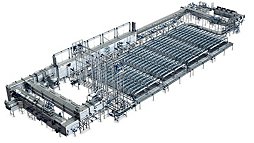
Das Tetra Pak® Ausformsystem ist eine fortschrittliche Lösung zum Pressen und Formen von Schnitt- und Hartkäsen in geschlossenen Pressen mit Formen- und Deckelhandling.
Funktionsprinzip
Die Bruchblöcke, die aus der Entmolkungsanlage kommen, werden in Formen gesetzt. Nachdem die Formen durch den Deckelplatzierer mit einem Deckel verschlossen wurden, werden sie in geschlossener Ausführung in den letzten Pressabschnitt gefördert. Dort wird der Bruchblock gepresst, um den Käse zu formen und durch eine allmählich zunehmende Presskraft eine gleichmäßige Rinde um den Käse auszubilden. Im letzten Pressabschnitt werden die Käselaibe in der Linie zur Ausformung aus der Form genommen und zu einem Salzbad befördert. Die Formen und Deckel werden umgedreht, bevor sie von der Spülmaschine gereinigt werden, und sind dann bereit für die Wiederverwendung.
Das Tetra Pak Formenhandling-System wird per SPS gesteuert. Die Reinigung des geschlossenen Pressensystems erfolgt durch CIP (Cleaning in Place).
Highlights
- Hygienisches Design
- Vollautomatischer und kontrollierter Produktionsprozess
- Flexibles Pressen von Käse unterschiedlicher Formen und Größen in derselben Anlage
Leistung:
Bis zu 100 Tonnen pro Tag
Applikationen:
Schnittkäse

Schnelligkeit und Flexibilität
- Flexibles Pressen von Käse unterschiedlicher Formen und Größen in derselben Anlage
- Hygienische Produktionsumgebung – gleichbleibend hohe Produktqualität
- Maximale Verfügbarkeit dank kürzerer Reinigungszyklen

Merkmale

Mehrere Formformate
Einfacher Wechsel
Wenn Sie Käse in verschiedenen Formen herstellen möchten, stehen Ihnen flexible Formensysteme zur Verfügung. Das Formenhandling einschließlich der Laude-Formen-Bereiche ist so ausgelegt, dass in einem Formenhandlingsystem unterschiedliche Formentypen verwendet werden können. Nicht benötigte Käseformen können im Formenlager aufbewahrt werden.

Individuelle Pressung
Vollständige Kontrolle über den Pressprozess
Bei diesem System werden die Pressplatten durch individuelle Druckluftzylinder aktiviert. Dadurch erhält jeder Käse die gleiche Presskraft, was zu einer gleichmäßigen Endproduktqualität führt.
Geschlossene Pressen
Kürzere Reinigungszeiten
Die Pressen sind geschlossen, was zur Aufrechterhaltung stabiler Produktionsbedingungen in Bezug auf Temperatur, Feuchtigkeit und Hygiene beiträgt. Zur Reinigung werden alle Formen aus der Linie entfernt und separat gelagert. Die geschlossenen Pressen ermöglichen eine effiziente CIP-Reinigung, was die Betriebszeit maximiert.
Zweistufiger Reinigungstunnel
Gewährleistet die Sauberkeit von Formen und Deckeln
Die Formen und Deckel werden nach jedem Gebrauch in die Reinigungsanlage gefördert. Der Reinigungsprozess beginnt mit dem Vorspülen mit Wasser aus der vorherigen Endspülung. Anschließend erfolgt die Hauptreinigung unter Beibehaltung einer stabilen Temperatur und Konzentration der Reinigungsmittel. Der letzte Schritt ist die Endspülung mit Frischwasser, um sicherzustellen, dass das gesamte Reinigungsmittel entfernt wird. Dieses Wasser wird dann zur Verwendung beim nächsten Vorspülen zum Beginn des Zyklus zurückgeführt, wodurch der Wasserverbrauch verringert wird. Der Tunnel selbst wird nach jedem Produktionszyklus gereinigt. Die Kapazität des Reinigungstunnels wird an die Linienkapazität angepasst.

Formenlager
Bequeme und sichere Aufbewahrung von Formen
Wenn die Anlage gereinigt werden muss oder wenn verschiedene Formformate verwendet werden, werden die Formen entfernt und in dieser Einrichtung aufbewahrt. Diese auf mehreren Ebenen aufgebaute Speichereinrichtung nutzt den Platz in Ihrem Produktionsbetrieb effizient aus. Und mit einem Regal pro Ebene werden die Formen sicher aufbewahrt.