
Vorteile
Hoher Wirkungsgrad
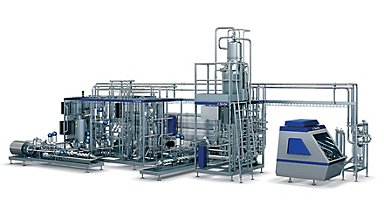
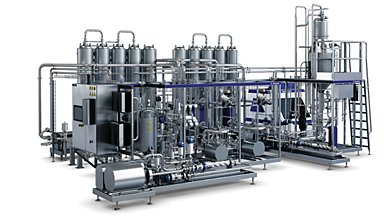
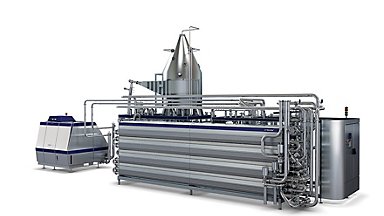
Die Tetra Pak® UHT-Anlage für indirekte Erhitzung ist eine Prozessanlage für die hocheffiziente, kontinuierliche UHT-Behandlung von Milchprodukten. Die Anlage im aseptischen Design nutzt einen Röhren- oder Plattenwärmetauscher für die indirekte Erhitzung, um ein Produkt zu erhalten, das bei Raumtemperatur gelagert werden kann.
Kurzübersicht
Kontinuierliche UHT-Behandlung für flüssige Lebensmittel unter aseptischen Bedingungen
Leistung
1.000 – 40.000 l/h
Applikationen
Die Tetra Pak UHT-Anlage für indirekte Erhitzung eignet sich für Milchprodukte wie Milch, aromatisierte Milch, Sahne, Trinkjoghurt, Büffelmilch und formulierte Milchprodukte sowie für andere schwach saure Produkte wie Sojamilch. Kombinationen mit milchfreien Anwendungen wie Saft, Tee und Kaffee sind ebenfalls möglich.

Hohe Effizienz, geringe Betriebskosten
- Bester Lieferumfang und niedrige Gesamtbetriebskosten durch Effizienz und reduzierten Betriebsmittelverbrauch während des gesamten Produktionszyklus
- Geringer Energieverbrauch während der Vorsterilisation durch eine geschlossene Sterilisation
- Ruhemodus – Reduzierung von Dampf und Energieverbrauch um 60 % während der Wasserzirkulation.
- Verschmutzungskontrolle und intelligente Reinigungslösungen verlängern die Produktionszeit, was zu Betriebskosteneinsparungen führt
- Integrierte, automatisierte Betriebsabläufe erlauben einen vollständigen Überblick über die Produktion

Merkmale
Wärmerückgewinnung Produkt-gegen-Produkt
Verringerter Bedarf an Dampf und Kühlmedien
Die direkte Wärmerückgewinnung Produkt-gegen-Produkt ermöglicht einen geringen Dampfverbrauch (nur 20 kg pro 1.000 kg Produkt) und macht eine 92 %ige Wärmerückgewinnung möglich. Weitere Energieeinsparungen können durch Erreichen einer Auslauftemperatur erzielt werden, die ~15°C über der Zulauftemperatur liegt. Dies bedeutet eine deutliche Verringerung des erforderlichen Kühlmediums.
Fouling-Kontrolle
Mit längeren Produktionsstandzeiten Geld sparen
Das Fouling wird minimiert, sodass die Anlage bis zu 40 Stunden mit Milch in guter Qualität betrieben werden kann, was die Kosten pro produziertem Liter reduziert. Dies wird durch ein optimiertes Set-up mit Temperaturregelung im Heißhalter für die Proteindenaturierung, mit der präzisen Regelung der Temperaturdifferenz (ΔT) und des Druckabfalls sowie des Durchflusses in den Heißwasserkreisläufen erreicht.
Vorlaufbehälter mit Befüllung über den unteren Boden
Geringere Produktverluste
Der Vorlaufbehälter zeichnet sich durch eine spezielle Befüllungskonstruktion über den unteren Boden und einen scharfen Übergang zwischen den Mischphasen aus. Verglichen mit dem herkömmlichen Flachboden-Vorlaufbehälter können mit diesem speziell konstruierten Vorlaufbehälter bei jedem Produktwechsel (bei 15.000 l/h) bis zu 75 Liter* Milch eingespart werden. Durch die Anordnung des Zulaufventils wird die Mischphase verkürzt und durch eine frequenzgesteuerte Pumpe der Energieverbrauch weiter verringert.
* Die Berechnung basiert auf dem Vergleich des verlustarmen Ausgleichstanks mit der Tetra Pak® UHT-Anlage für indirekte Erhitzung. Produktionsszenario: 15.000 l/h Kapazität, 3 Produktwechsel/Tag, 300 Produktionstage/Jahr
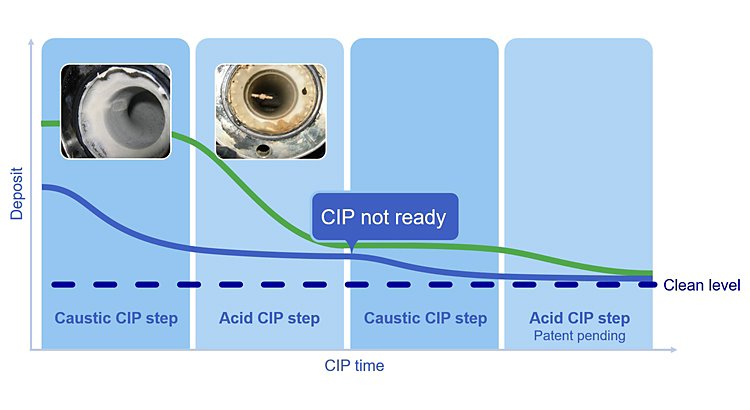
IntelliCIP™ 2.0
Bedarfsgerechte Reinigung
Dank der neuen Technologie IntelliCIP™ 2.0 (unter WO2013092414 zum Patent angemeldet) können die Reinigungsergebnisse mithilfe von CIP-Sensoren in-line überwacht werden. Dies bedeutet, dass Einstellungen für die Reinigung je nach Fouling-Grad optimiert werden können, was zu einer längeren Produktionszeit und einer Senkung der Betriebsmittelkosten führt.
Automatische Pulsationsdämpfer
Für längere Produktionszeiten
Pulsationsdämpfer im Homogenisator absorbieren Druckschwankungen vor und nach der Maschine. Die automatische Nachfüllung von Luft erhält das Luftpolster im Pulsationsdämpfer des Homogenisators und sichert so einen reibungslosen Betrieb. Ohne das Luftpolster würden Vibrationen und Kavitation auftreten und die Produktionszeit verringern. Inklusive vollautomatischer CIP-Reinigung – erhöht die Bedienersicherheit, verbessert die Hygiene und optimiert den Produktionszyklus.

Stand-by-Modus (Hibernation)
Spart Kosten bei der Sterilwasserzirkulation
Liegt zwischen der Vorsterilisierung und der Produktion ein zeitlicher Abstand, kann die Anlage so eingestellt werden, dass sie automatisch in den Stand-by-Modus wechselt. Diese optionale Funktion reduziert den Verbrauch an Strom und Kühlwasser bei der Sterilwasserzirkulation um bis zu 60 % im Vergleich zur herkömmlichen Wasserzirkulation – ohne dabei den aseptischen Zustand der Anlage aufs Spiel zu setzen.
Abdeckbleche für Wärmetauscher
Hohes Energieeinsparungspotenzial
Um den Tetra Pak® Röhrenwärmetauscher montierte Abdeckbleche schließen die Anlage ein und bewahren die Wärme. Dies führt zu einer Einsparung von bis zu 6 % beim Energieverbrauch im Vergleich zu Wärmetauschern ohne Bleche. Durch die zusätzliche Isolierung können die Einsparungen sogar auf 11 % ansteigen. Die Abdeckbleche erhöhen zudem die Bedienersicherheit, da sie das Risiko des Kontakts mit heißen Oberflächen verringern.
Floating Protection System für Wärmetauscher
Längere Lebensdauer und außergewöhnliche Effizienz
Das aseptische Produkt fließt in den Innenrohren des Tetra Pak® Röhrenwärmetauschers mit einem höheren Druck als das unbehandelte Produkt auf der Mantelseite. Das Floating Protection System ermöglicht die thermische Ausdehnung, was die Gefahr einer Beschädigung durch Rissbildung und der daraus folgenden Insterilität deutlich verringert. Neben einer verlängerten Lebensdauer sorgt dies für eine Verbesserung der Lebensmittelsicherheit.




Ein neuer Ansatz für die Ressourcennutzung
Lebensmittel- und Getränkeproduzenten stehen vor wachsenden Herausforderungen in den Bereichen Energie-, Wasser- und Abfallmanagement. Um sie anzugehen, ist eine Kombination aus Technologie und Lebensmittelkompetenz erforderlich, die auf Ihre Betriebsabläufe zugeschnitten ist. Unser umfassendes Portfolio an Produkten und Dienstleistungen, gestützt auf jahrzehntelange Erfahrung in Lebensmittelanwendungen, kann Ihnen helfen, Energie, Wasser und Verschwendung zu reduzieren und gleichzeitig Kostenvorteile zu erzielen.
